

Planning funeral arrangements during a time of grief can often feel overwhelming, as families must navigate unfamiliar terminology, tight time pressures, and difficult emotions while trying to honor a loved one. Whether you are currently facing the immediate loss of a family member or proactively thinking ahead to plan your own final arrangements, having a clear understanding of your options provides essential clarity, reduces stress, and brings genuine peace of mind to everyone involved.
This comprehensive guide is designed to walk you through every critical stage of the planning process, covering everything from the immediate legal steps following a death to exploring various service types, selecting appropriate funeral arrangements, managing costs transparently, and understanding legal requirements. By breaking down each step, you can make informed, confident, and compassionate decisions that honor your loved one’s memory while keeping financial and emotional well-being in mind.
Immediate Steps After a Loss: What to Do First
When a death occurs, navigating the first hours and days requires knowing the exact legal and practical steps to take. Having a clear checklist can make the process of arranging a funeral far less stressful.
- Pronouncement of Death: If the death occurs at home, contact hospice or emergency personnel to obtain an official pronouncement. If it occurs in a hospital or care facility, staff will typically handle this step for you.
- Transporting the Body: Arrange for a licensed funeral home to transfer the deceased into their care. This is usually the first call a family makes once a loss occurs.
- Obtaining the Death Certificate: Work with the attending physician or medical examiner, along with your funeral director, to secure official copies of the death certificate.
- Notifying Key Parties: Employers, insurance providers, banks, and close family members should be informed early, since several of these steps run in parallel.
A note on documentation: most families underestimate how many certified copies of the death certificate they’ll need. It’s wise to request between five and ten certified copies up front, since banks, insurers, pension administrators, and government agencies each typically require their own original copy rather than a photocopy. This guidance reflects general best practices outlined by organizations such as the National Funeral Directors Association (NFDA).
Choosing Between Burial and Cremation
The foundational decision behind any funeral arrangement is the method of final disposition. This choice is deeply personal and is often shaped by religious tradition, family wishes, environmental values, or budget.
Traditional Burial
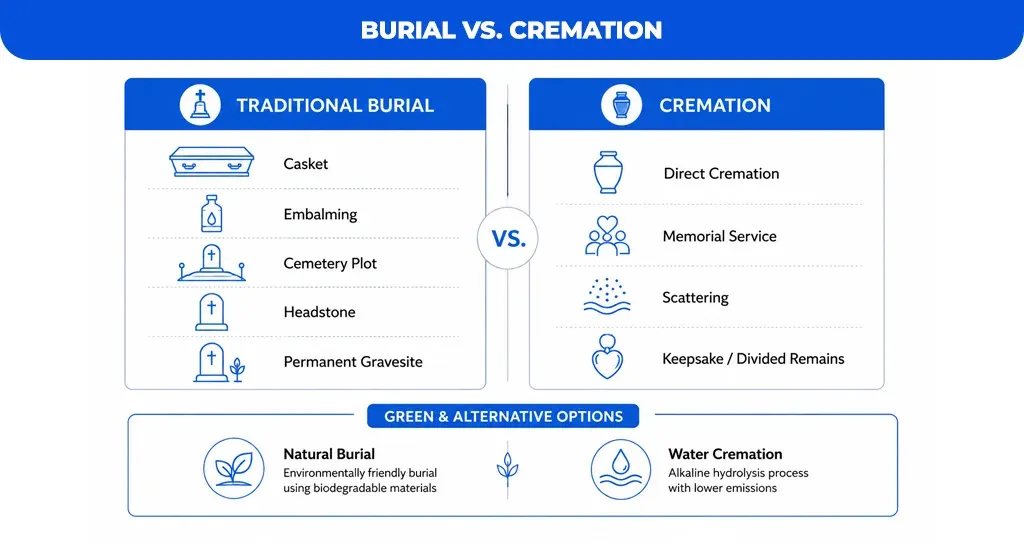
A traditional burial typically involves embalming, selection of a casket, purchase of a cemetery plot, and a permanent headstone or grave marker. This option tends to carry the highest overall cost but offers a fixed, physical place for family and friends to visit.
Cremation Options
Cremation has become an increasingly common choice and offers considerably more flexibility. Families can choose direct cremation, cremation followed by a traditional memorial service, or a scattering ceremony at a meaningful location. Many families also choose to keep or divide cremated remains among relatives.
Alternative and Green Dispositions
A growing number of families are exploring alternative dispositions, including green (natural) burial, which forgoes embalming chemicals and non-biodegradable materials, and alkaline hydrolysis (sometimes called water cremation), a gentler, lower-emission alternative to flame-based cremation.
Industry data compiled by organizations such as the Cremation Association of North America (CANA) tracks the ongoing shift toward cremation and green alternatives, along with their relative costs and environmental footprints, which can be a useful reference point when weighing your options.
Types of Funeral Services and Ceremonies
Honoring a life can take many forms, from traditional religious rites to deeply personal celebrations. When arranging a funeral, it helps to think about what would feel most true to your loved one’s personality and values.
- Traditional Funeral Services: Typically include a viewing or visitation, a formal funeral ceremony (often religious), and a committal service at the graveside.
- Celebration of Life: A less formal, more uplifting gathering that focuses on hobbies, achievements, and positive shared memories rather than a somber structure.
- Memorial Services: Held days, weeks, or even months after the death, usually without the body or casket present, giving families more time to plan and out-of-town guests time to travel.
Personal touches matter. Many families choose to display photographs, play meaningful music, or arrange funeral flowers that reflect the person’s favorite colors or garden. Floral arrangements for a funeral, whether a formal standing spray, a casket blanket, or simpler sympathy flowers for the reception table, remain one of the most visible and comforting traditions at any service. If you’re unsure what kind of arrangement is appropriate for funeral arrangements, a standing spray or wreath is customary for the service itself, while smaller vase arrangements are typically sent to the family’s home.
Understanding Funeral Costs and Budgeting
Transparent financial planning helps families avoid unexpected expenses during an already emotionally vulnerable time. Funeral arrangement costs can add up quickly, so understanding what you’re paying for and what’s optional is essential.
The General Price List (GPL)
Under the FTC’s Funeral Rule, funeral homes in the United States are legally required to provide an itemized General Price List upon request. This allows you to compare providers and decline services you don’t want, rather than accepting a single bundled package.
Common Expense Categories
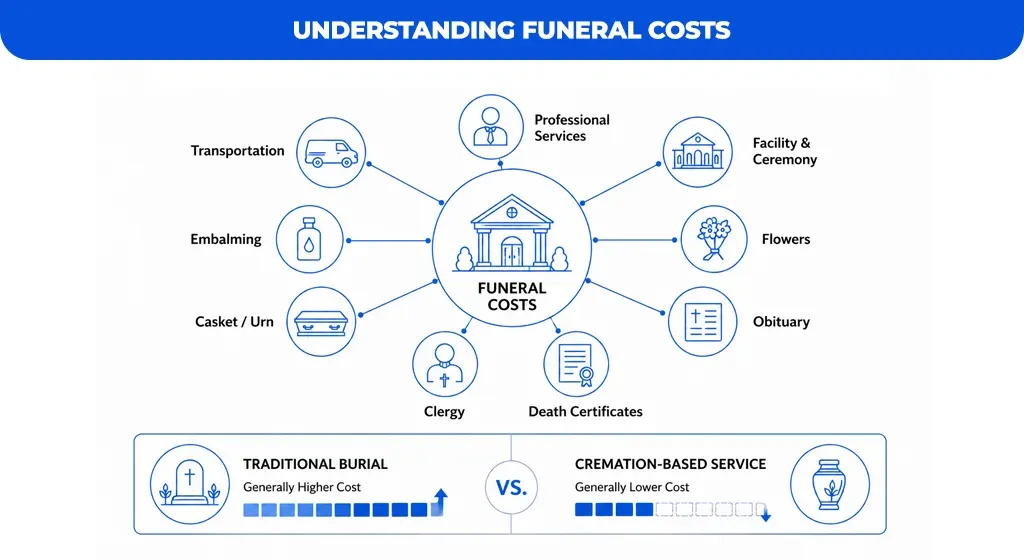
- Professional services fee (covers the basic services of the funeral director and staff)
- Transportation of the deceased and, if selected, embalming
- Casket, urn, or outer burial container (vault)
- Facility rental and staff for the viewing or ceremony
- Third-party “cash advance” items, such as obituaries, funeral flower arrangements, clergy honoraria, and additional death certificates
According to data compiled from NFDA industry surveys and FTC Funeral Rule disclosures, a traditional funeral with burial generally costs meaningfully more than a cremation-based service, largely due to casket and cemetery expenses. Costs vary significantly by region, provider, and the level of customization families choose, so requesting an itemized GPL from more than one funeral home is one of the most effective ways to keep a budget under control.
Pre-Planning vs. At-Need Arrangements
Taking control of your own final arrangements ahead of time relieves a significant financial and emotional burden from your loved ones later. This is one of the most valuable and most overlooked gifts you can leave your family.
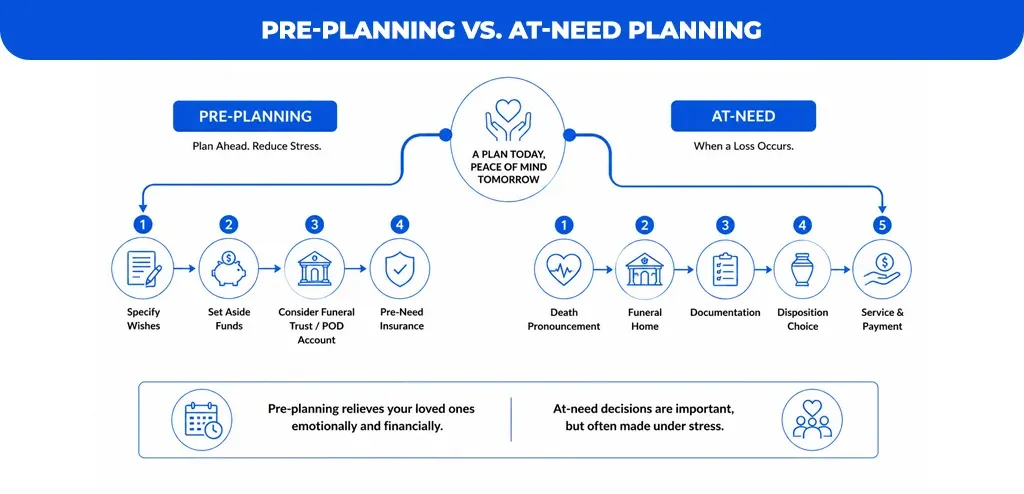
- Benefits of Pre-Planning: Locking in today’s prices, specifying your exact wishes in writing, and preventing disagreements among family members during a stressful time.
- Funeral Trusts: Dedicated accounts set up specifically to pre-fund funeral costs, often arranged directly through a funeral home.
- Payable-on-Death (POD) Accounts: Bank accounts that transfer directly to a named beneficiary upon death, bypassing probate delays.
- Pre-Need Insurance Policies: Life insurance products specifically designed to cover funeral and final expenses, paid out quickly to whoever is designated to handle arrangements.
Because funeral costs tend to rise with inflation, locking in arrangements or at least setting aside dedicated funds years in advance can meaningfully reduce the amount your family eventually has to pay. Consumer guides from the NFDA on pre-planning are a useful starting point if you want to think through funding options in more detail before speaking with a provider.
Conclusion
Navigating funeral arrangements is one of the most profound responsibilities you will ever face, whether you’re planning ahead for your own peace of mind or honoring a recently departed loved one. By understanding your options, from service types and disposition methods to transparent budgeting and thoughtful funeral flower arrangements, you can create a respectful, meaningful tribute without unnecessary stress.
To ensure you and your family are fully supported every step of the way, expert guidance makes all the difference. Visit Assurance Gurus today to explore comprehensive planning resources, expert advice on final expense protection, and tailored solutions designed to secure your family’s financial future.