



Did you know your primary health insurance might only cover roughly 60% to 80% of your actual medical expenses? Even with a solid policy, unexpected out-of-pocket costs from a surprise ambulance ride to a multi-day hospital stay can catch you off guard. According to KFF’s 2026 Employer Health Benefits Survey, the average deductible for workers with single coverage has climbed to $1,886, a 43% increase over the past decade, and nearly three-quarters of covered workers now face an out-of-pocket maximum above $3,000. That gap between what your plan pays and what you actually owe is exactly where supplemental health insurance steps in.
This comprehensive guide breaks down everything you need to know about supplemental health insurance plans, how they work, the different types available, how to spot your own coverage gaps, and the practical steps for choosing the right policy. Whether you’re wondering “what is supplemental health insurance” for the first time or comparing supplemental health insurance companies for your family, this article will help you protect your finances and your peace of mind.
What Is Supplemental Health Insurance and How Does It Work?
Supplemental health insurance is an additional policy layered on top of your primary health plan. It’s designed to help cover the costs your main insurance leaves behind, things like copays, deductibles, coinsurance, and other expenses that add up fast during a medical event. In simple terms, health insurance supplements exist to catch the bills your primary carrier doesn’t pay.
It’s important to understand one thing up front: supplemental insurance does not replace your primary health insurance. It works alongside it, acting as a financial safety net rather than a substitute for major medical coverage.
Indemnity Policies vs. Expense-Incurred Policies
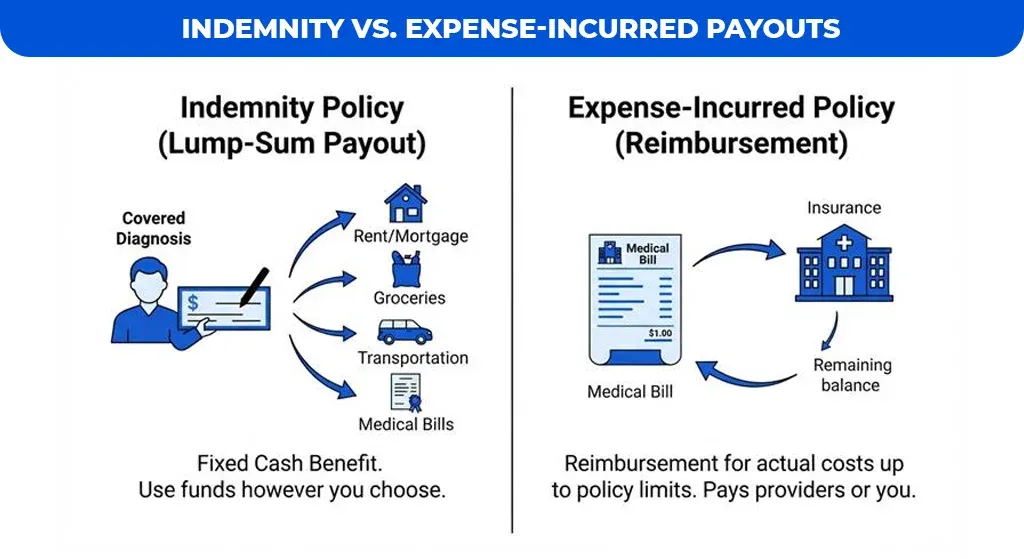
Indemnity policies pay you a fixed, predetermined cash benefit when a covered event occurs a diagnosis, a hospital admission, or an injury regardless of your actual medical bills. You can use that cash however you need, whether that’s rent, groceries, transportation, or medical bills themselves.
Expense-incurred policies, on the other hand, reimburse you (or pay providers directly) based on the actual costs you incur, up to the policy’s limits. Most supplemental health care insurance products critical illness, hospital indemnity, and accident plans fall into the indemnity category, which is part of why they’re so flexible.
This distinction matters when you’re comparing supplemental health insurance quotes: an indemnity-style payout gives you cash-in-hand flexibility, while expense-incurred coverage ties reimbursement directly to your documented bills.
Why the Gap Keeps Growing
Out-of-pocket healthcare spending has been on a steady climb. KFF’s most recent employer survey found that annual premiums for family coverage reached $26,993 in 2026, up 6% from the prior year, while the share of workers facing deductibles of $2,000 or more has jumped 32% in just five years. As high-deductible health plans (HDHPs) become more common, the burden of first-dollar costs is shifting more heavily onto patients, which is exactly the trend that makes supplemental health insurance coverage increasingly relevant for everyday households, not just people with chronic conditions.
The Most Common Types of Supplemental Health Policies
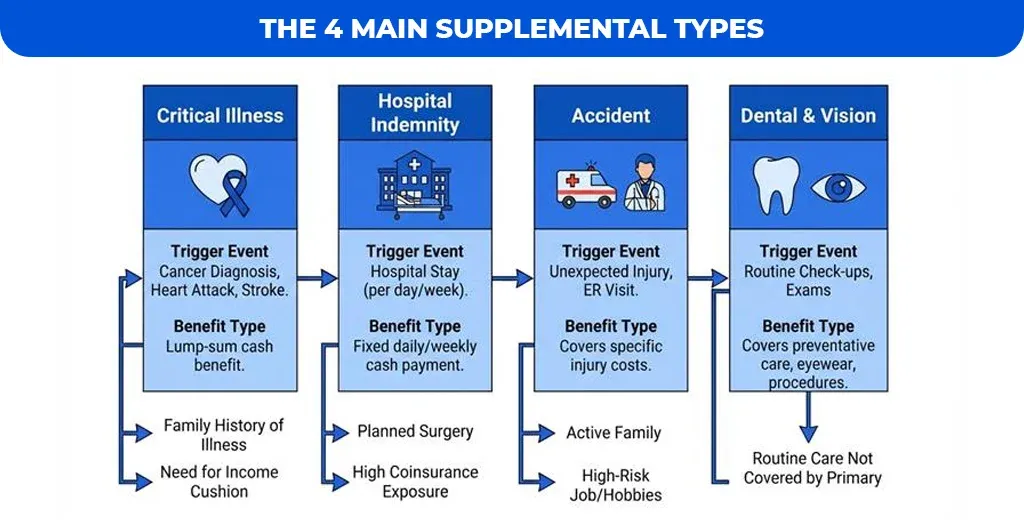
Not all supplemental health insurance policies work the same way. Each type is designed to address a specific kind of financial exposure. Here’s a breakdown of the most common options and who tends to benefit most from each.
Critical Illness Insurance
- What it does: Pays a lump-sum cash benefit if you’re diagnosed with a covered serious illness, such as cancer, a heart attack, or a stroke.
- Best for: People with a family history of major illness, those who want a cash cushion for lost income during treatment, or anyone carrying a high-deductible plan.
Hospital Indemnity Insurance
- What it does: Provides a fixed daily or weekly cash benefit for each day you’re hospitalized, helping offset facility fees, specialist bills, and everyday living costs while you recover.
- Best for: Individuals with planned surgeries on the horizon, older adults, or anyone whose primary plan leaves large hospital coinsurance exposure.
Accident Insurance
- What it does: Covers costs tied to unexpected injuries, emergency room visits, ambulance transport, urgent care, physical therapy, and related follow-up treatment.
- Best for: Active families, people with young children, weekend athletes, or anyone with a physically demanding job or high-risk hobbies.
Dental and Vision Plans
- What they do: Add necessary, routine cleanings, fillings, eye exams, and corrective lenses that are usually excluded or tightly capped by normal major medical policies.
- Best for: Nearly everyone, since routine dental and vision care is rarely bundled comprehensively into primary health insurance.
When people search for the best supplemental health insurance for their situation, the answer usually isn’t a single “best” plan; it’s the right combination of these coverage types layered against your specific risks and budget.
Do You Need Supplemental Insurance? Assessing Your Coverage Gaps
Before shopping for a policy, it helps to run a quick self-assessment. Ask yourself the following questions to gauge how exposed you really are:
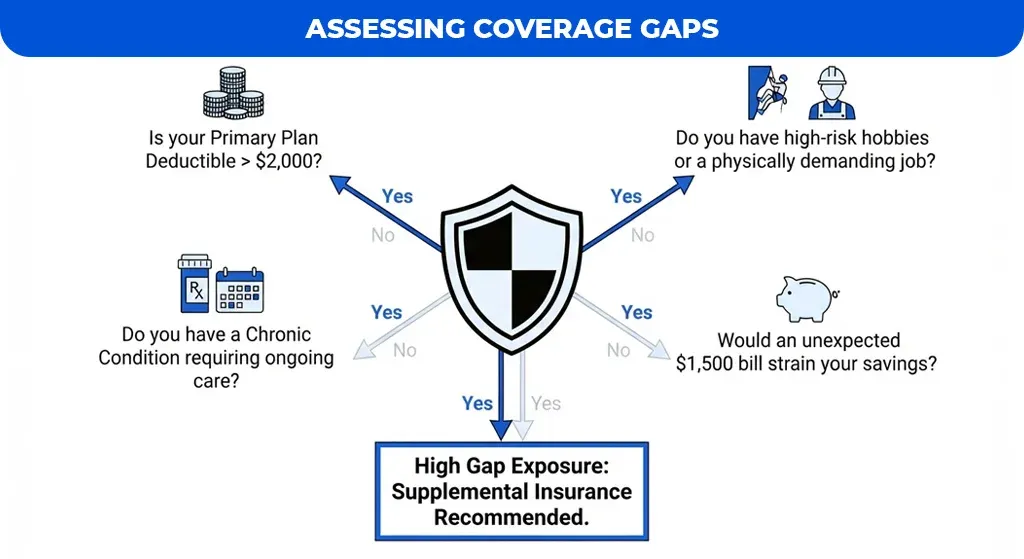
- Do you have a high-deductible health plan (HDHP)? If your deductible is $2,000 or more, a single hospital visit could wipe out a significant chunk of your savings before your plan pays a dollar.
- Do you or a member of your family suffer from a chronic illness? Ongoing care often means recurring copays, specialist visits, and prescription costs that add up over a year.
- Do you have high-risk hobbies or a physically demanding job? Frequent activity-related injuries increase your odds of needing accident-related care.
- What is your emergency savings amount? If a $1,500 bill would strain your finances, that’s a strong signal supplemental coverage could help.
This is also where it pays to run the math. Compare your monthly premium for a supplemental plan against the realistic cost of an unplanned hospital stay or diagnosis. A modest monthly cost often looks small next to the risk of a five-figure medical bill.
One of the primary causes of financial stress in the US is still medical debt. Numerous studies, including consumer finance research and health policy analyses, have identified unexpected medical expenses as a major factor behind personal bankruptcy filings and depleted savings, even among people who technically had insurance at the time. That’s the core problem supplemental health insurance is built to solve: it closes the space between covered and affordable.
How to Choose the Right Supplemental Plan for Your Needs
Once you’ve confirmed you have gaps worth covering, use this step-by-step process to evaluate your options.
- Review your current primary health insurance policy. Pull out your summary of benefits and identify the specific weak points: a high deductible, no hospital cash benefit, or missing dental and vision coverage.
- Assess your family’s medical history and projected healthcare utilization. Consider chronic conditions, upcoming procedures, family planning, and how often your household typically uses medical care.
- Compare quotes, waiting periods, and benefit limits across multiple insurers. Two policies with similar premiums can have very different payout caps or elimination periods, so line them up side by side.
- Read the fine print on pre-existing conditions and payout restrictions. Look closely at exclusions, waiting periods before benefits kick in, and any caps on lifetime or annual payouts before you commit.
This process applies whether you’re evaluating a standard supplement health insurance plan for a working-age household or comparing Medicare supplemental health insurance options as you approach retirement.
A Note on Medicare Supplemental Coverage
If you’re enrolling in or already on Medicare, the landscape shifts slightly. Supplemental health insurance for Medicare, often called Medigap, is specifically designed to cover the gaps left by Original Medicare, such as coinsurance, copayments, and deductibles. Many supplemental health insurance for seniors shoppers also compare Medigap against AARP health insurance supplemental plans and other carrier options, since coverage details, pricing, and enrollment windows can vary meaningfully by provider and by state. If you’re evaluating Medicare and supplemental health insurance together, timing matters; enrolling during your Medigap open enrollment period generally means insurers can’t use medical underwriting to deny coverage or charge you more.
Protect Your Savings with the Right Supplemental Coverage
Supplemental health insurance is a powerful, often underused tool for shielding your savings from the unpredictable costs that primary insurance leaves behind. Whether it’s a critical illness diagnosis, an unexpected trip to the emergency room, or a routine dental cleaning your major medical plan won’t touch, the right combination of supplemental health insurance plans can mean the difference between a manageable bill and a financial setback.
The key is matching your policy choices to your unique lifestyle, health risks, and budget, not just picking the cheapest option on the page.
Ready to take control of your financial security? Visit Assurance Gurus today. Our team offers expert guidance, personalized plan comparisons, and hands-on professional support to help you find the ideal supplemental health insurance policy tailored to your needs, so you can face whatever comes next with confidence.