



Losing someone you love is disorienting enough without having to make five-figure financial decisions within days of their passing. If you’re asking what the average cost of a funeral is today, you’re not alone, and you’re asking at exactly the right time, before the pressure of a funeral home showroom makes the decision for you.
The average cost of a funeral in the United States runs between $7,800 and $12,000 for a traditional burial, and $6,000 to $9,000 for a funeral with cremation, according to the most recent data from the National Funeral Directors Association (NFDA), adjusted for 2026 pricing. Add cemetery property, a vault, and a headstone, and a full burial can climb well past $13,000.
This guide breaks down exactly where that money goes, how burial and cremation compare, why your zip code can swing the total by thousands of dollars, and most importantly, the specific, legal ways to bring the number down without cutting corners on dignity.
What Is the Average Cost of a Funeral Today?
According to NFDA survey data, the national median for a funeral with viewing and burial sits at roughly $8,300, and closer to $9,995 once a burial vault is included. Adjusted for the funeral-inflation rate tracked by the Bureau of Labor Statistics, that translates to approximately $9,200 to $11,000 in 2026 dollars, before cemetery costs are added.
A funeral with cremation is meaningfully less expensive. The NFDA reports a median of roughly $6,280 to $6,970 for a full-service cremation funeral with viewing, which is why more households are choosing it every year.
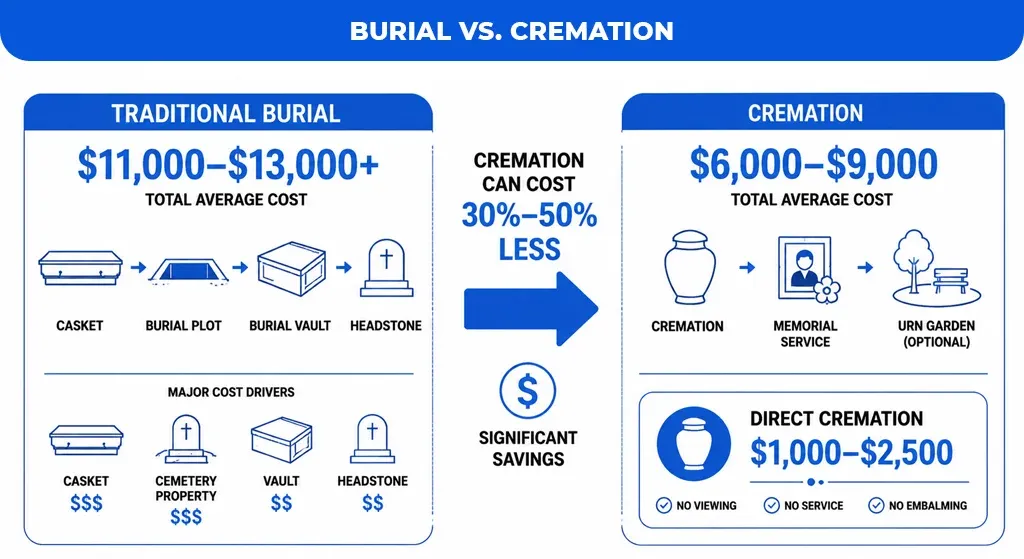
Quick reference: the average cost of a funeral and burial together, including cemetery property, typically lands between $11,000 and $13,000 nationally, while the average cost of a funeral with cremation, including a memorial service, generally falls between $6,000 and $9,000.
Itemized Breakdown: Where the Money Actually Goes
Funeral pricing feels opaque because it’s bundled into packages. Every funeral home in the United States is subject to the FTC’s Funeral Rule and is legally required to give you an itemized General Price List (GPL) on request, so you can see exactly what you’re paying for line by line.
| Line Item | Burial Range | Cremation Range |
| Basic services fee (non-declinable) | $2,300 – $2,500 | $2,300 – $2,500 |
| Embalming & body preparation | $750 – $1,000 | Not required |
| Facility use (viewing & ceremony) | $500 – $1,000 | $500 – $900 |
| Transportation (hearse, service vehicles) | $300 – $800 | $150 – $400 |
| Casket or urn | $2,000 – $10,000+ | $100 – $1,500 |
| Cremation fee | N/A | $300 – $500 |
| Cemetery plot, vault & headstone (third-party) | $2,500 – $8,000+ | Optional (niche/urn garden) |
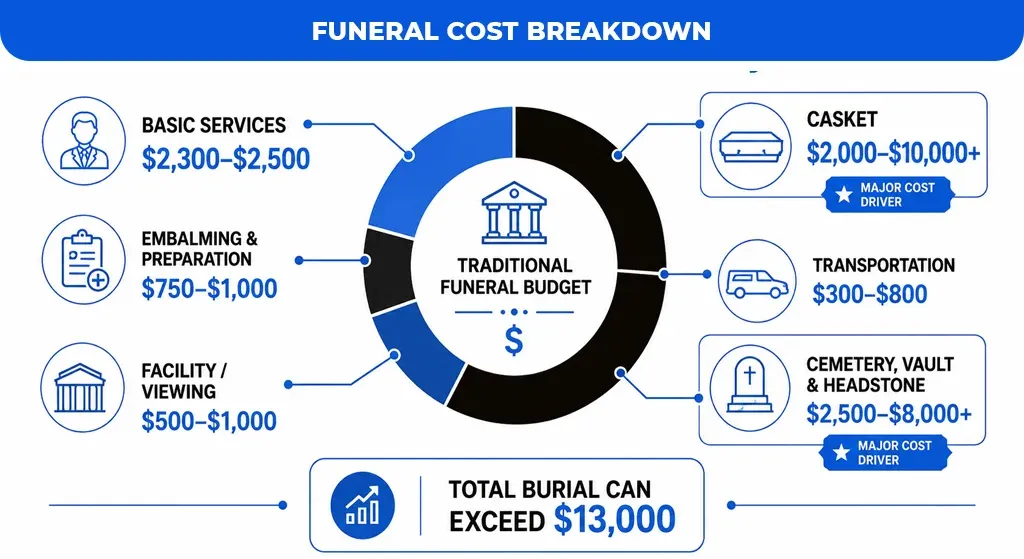
A few elements regarding the table are important to comprehend:
- Basic services fee: This is the one line item you cannot decline. It covers the funeral director’s overhead, coordination, and permit filing; expect roughly $2,300 to $2,500 regardless of what else you choose.
- Embalming: Not required by law in most states unless there’s a public viewing with no refrigeration alternative. Skipping it is one of the simplest ways to lower a cremation total.
- The casket: Almost always the single largest purchase in a burial package, and the one item you have the most legal freedom to shop around for.
- Cemetery costs: Cemetery plots, vaults, and headstones are billed by the cemetery, not the funeral home, and are frequently left out of “average funeral cost” headlines, which is why families are frequently taken aback by the final payment.
Burial vs. Cremation: Cost Comparison
The gap between the average cost of a funeral cremation and a traditional burial has become one of the biggest drivers of consumer choice. Cremation now accounts for more than 60% of dispositions nationally, up from roughly 30% in 2010, largely because of cost.
Direct cremation (no viewing, no embalming, no formal service) is the least expensive legal option in the U.S., typically running $1,000 to $2,500. A full cremation funeral with a viewing and memorial service costs considerably more, usually $6,000 to $9,000, because it still includes the basic services fee, facility use, and staffing.
Traditional burial remains the more expensive path chiefly because of what happens after the funeral home is done: cemetery plots range from $1,000 to $4,000 or more depending on location, a concrete burial vault (required by most cemeteries) averages around $1,500, and a headstone or grave marker adds another $1,500 to $5,000.
How Location Changes the Average Cost of a Funeral
Geography affects funeral pricing the same way it affects housing: real estate scarcity, local labor costs, and cemetery land values all get passed on to the family. A funeral in a major coastal metro can cost 30% to 50% more than the identical service in a rural county two hours away.
| State | Avg. Burial Funeral | Avg. Cremation Funeral |
| New York | $10,500 – $13,500 | $7,500 – $9,500 |
| California | $9,800 – $12,800 | $6,800 – $8,800 |
| Texas | $7,800 – $10,200 | $5,800 – $7,500 |
| Ohio | $7,500 – $9,800 | $5,500 – $7,200 |
| Georgia | $7,200 – $9,500 | $5,200 – $6,900 |
| Michigan | $7,600 – $9,900 | $5,600 – $7,300 |
These are directional estimates built from national and regional industry pricing surveys. Always request a local GPL for an exact quote, since costs can vary by thousands of dollars between two funeral homes in the same city.
Smart, Legal Ways to Save Money on a Funeral
None of these strategies require sacrificing a meaningful goodbye. They simply stop you from paying for services you never asked for.
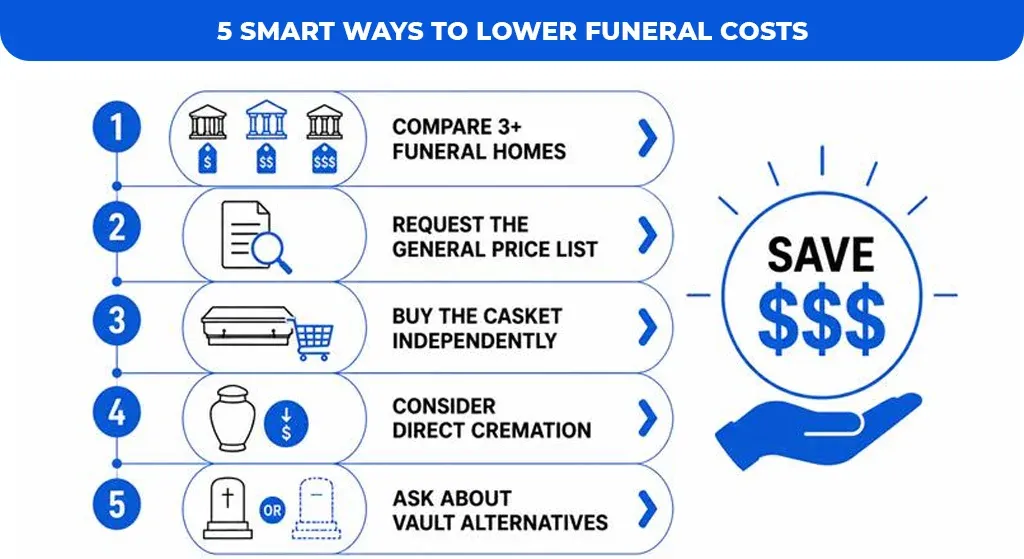
- Compare GPLs from multiple providers: Request the General Price List from at least three funeral homes before committing to anything. Prices for the identical package can differ by thousands of dollars within the same city.
- Buy the casket independently: The FTC Funeral Rule guarantees your right to buy a casket from a third-party retailer without the funeral home charging a handling or “non-use” fee; this alone can save $1,000 to $3,000.
- Choose direct cremation or a green burial: Skipping embalming and a full viewing in favor of a memorial service afterward removes several line items entirely, often cutting the total by half or more.
- Unbundle goods from services: Funeral homes often bundle flowers, printed materials, and staffing into a package price. Ask what’s included and decline anything you plan to source yourself.
- Ask about vault alternatives: Some cemeteries require a vault, others don’t, and grave-liner alternatives can cost hundreds less than a full concrete vault.
Planning Ahead Protects the People You Love
Understanding the true average cost of a funeral doesn’t make the loss any easier, but it does put you back in control at a moment when very little else feels controllable. Whether you’re comparing burial and cremation costs for a loved one today or planning years ahead for your own family, the goal is the same: honor the people you love without leaving the next of kin with a bill they didn’t see coming.
That’s exactly where Assurance Gurus comes in. We help families put a plan in place before it’s needed, matching you with final expense and life insurance coverage sized to the real cost of a funeral in your state, not a generic national average. No one should have to choose between grieving properly and paying rent that month.
Visit Assurance Gurus today to compare affordable final expense coverage options and give your family the gift of one less financial decision to make during the hardest week of their lives.