


Introduction
Losing a loved one brings a wave of decisions that most families are never fully prepared to make. Choosing the right memorial funeral home is one of the most consequential of those decisions, because it shapes not only the logistics of the days ahead but how your family remembers and honors a life. This guide walks through what a memorial funeral home actually does, the services worth understanding before you sign anything, and how to evaluate a provider with clear eyes even while you are grieving.
Whether you are pre-planning your own arrangements or supporting a family member through an immediate loss, the goal is the same: make informed decisions with confidence, not pressure. Navigating this delicate process requires understanding your consumer rights, exploring various disposition and ceremony options, and recognizing the value of professional guidance. By taking the time to research providers and ask the right questions early on, you can alleviate unnecessary stress and ensure a meaningful, personalized tribute that truly honors your loved one’s memory.
Understanding the Role of a Memorial Funeral Home
What Is a Memorial Funeral Home and How Can They Help?
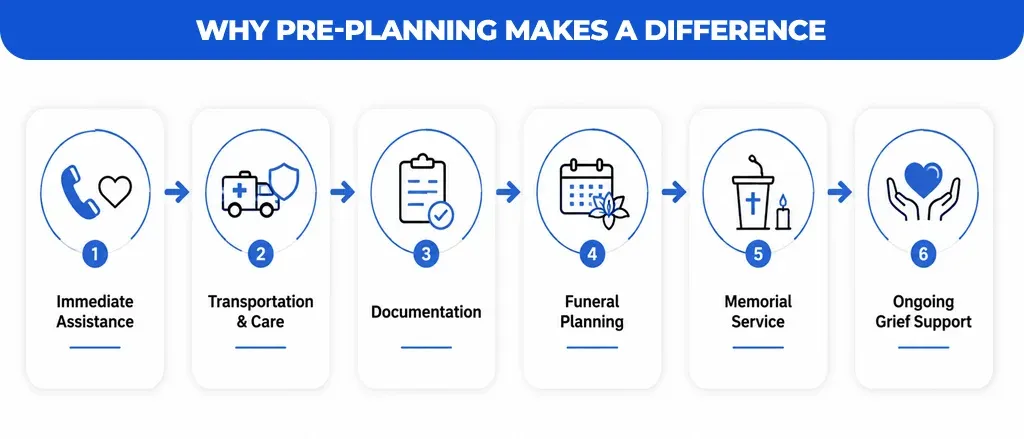
A modern funeral home does far more than host a service. Staff coordinate transportation and care of the deceased, prepare and file legal paperwork such as death certificates and burial permits, and act as a single point of contact between the family, the cemetery, clergy or celebrants, and any out-of-state family members who need to be looped in.
Funeral planning has also changed. Families increasingly ask for a celebration of life rather than a strictly traditional service an event built around the person’s interests, relationships, and story rather than a fixed template. A good funeral director will help you build that kind of tribute without losing the structure and dignity a formal service provides.
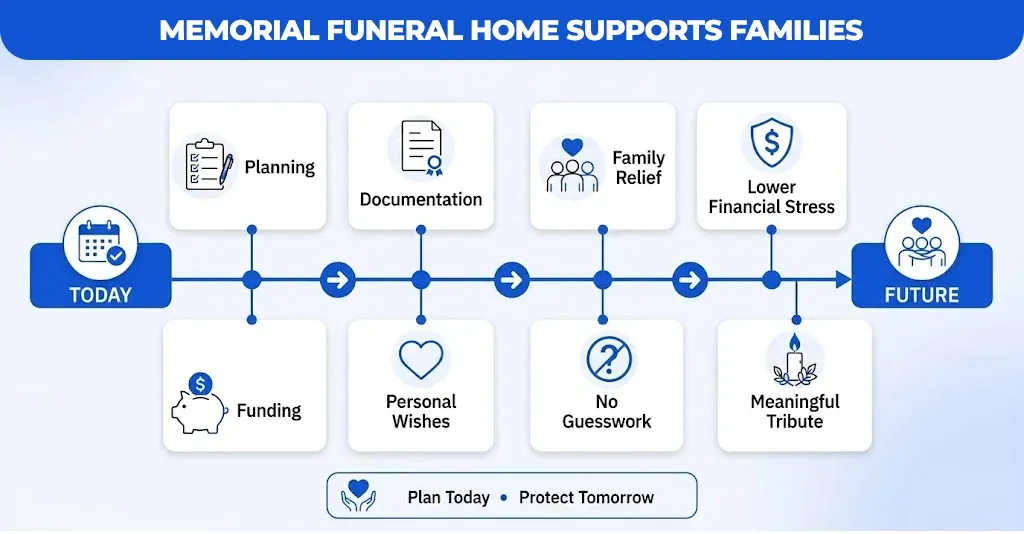
Perhaps the most underrated function of a quality provider is emotional triage: absorbing logistical stress from a family so grief has room to be felt rather than managed. According to the National Funeral Directors Association (NFDA), consumer demand for personalized memorialization options has grown steadily, with families increasingly expecting flexibility around format, cost, and how a life is represented.
Core Services Offered by Full-Service Facilities
Essential Funeral Services and Customization Options
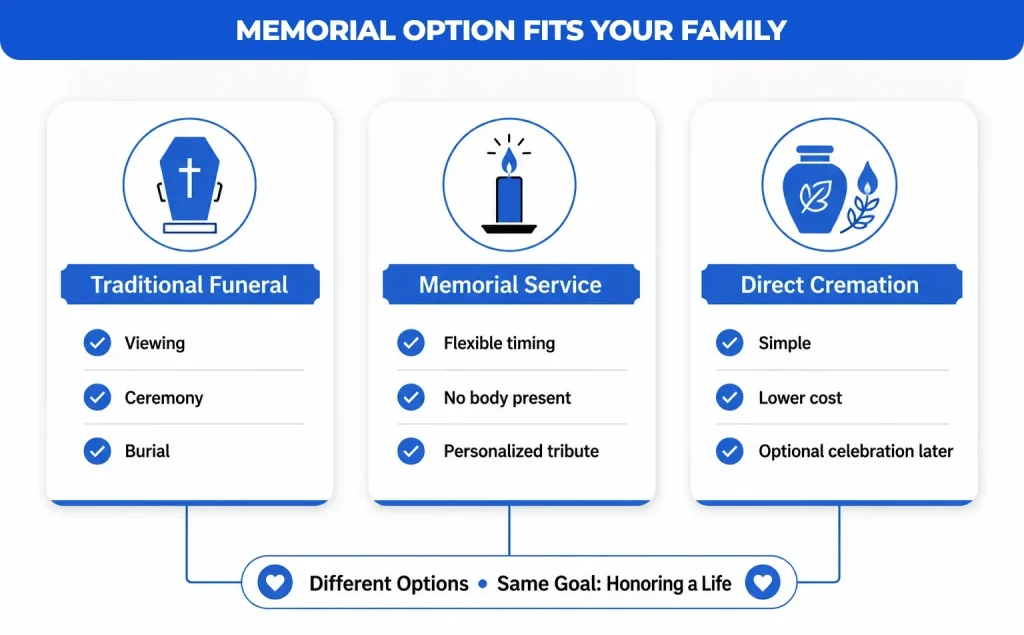
Full-service providers typically support several disposition options and a wide range of ceremony formats. Understanding the landscape helps you ask better questions during a consultation.
- Traditional viewing and visitation services, including embalming and casket selection
- Direct cremation and green or eco-conscious burial alternatives
- Customized memorial ceremonies and celebration-of-life events, including music, video tributes, and memory tables
- Worldwide shipping and repatriation of remains for families with ties abroad
Beyond the ceremony itself, a full-service home handles the administrative layer most families don’t anticipate: ordering certified copies of the death certificate, filing for veterans’ benefits when applicable, and coordinating burial or cremation permits with the appropriate county or state office. Ask upfront which of these tasks are included in your package versus billed separately.
Key Factors to Consider When Choosing a Provider
How to Select the Right Memorial Funeral Home for Your Family
Location and facility. Consider accessibility for elderly guests, seating capacity for the expected turnout, parking availability, and whether the space itself feels calm rather than clinical.
Transparency and pricing. Under the Federal Trade Commission’s Funeral Rule, every funeral home in the United States is legally required to provide an itemized General Price List (GPL) on request, and you’re entitled to select only the goods and services you actually want rather than a bundled package. Requesting this list in writing before committing is one of the simplest ways to avoid surprise charges.
Reputation and staff empathy. Read recent local reviews, ask for referrals from clergy or hospice staff who work with providers regularly, and pay attention to how quickly and compassionately a home responds to your first call. Responsiveness at the outset is usually a reliable signal of how you’ll be treated throughout the process.
A short list of direct questions to bring to any consultation:
- Can I see your General Price List before we discuss packages?
- What is included in your basic services fee, and what is billed separately?
- Do you offer payment plans, funeral trusts, or accept assignment of life insurance benefits?
- Can you accommodate a same-day or next-day service if needed?
The Benefits of Pre-Planning Your Arrangements
Peace of Mind Through Proactive Funeral Planning
End-of-life planning done in advance changes the experience for everyone involved. It replaces a rushed, emotionally taxing set of decisions with a calm, considered process, and it gives your family a clear roadmap when they need one most.
- Financial protection: locking in today’s pricing shields your family from years of inflation on services and merchandise
- Elimination of guesswork: documented wishes prevent disagreements among family members during an already difficult time
- Personal control: you get to design a tribute that actually reflects your values, faith, and relationships
Common funding vehicles include prepaid funeral trusts, which hold funds specifically for your arrangements, and final-expense insurance policies designed to cover funeral costs directly. A reputable funeral home will walk you through the difference and won’t pressure you into a specific option; if they do, treat that as a red flag.
Navigating Grief: Post-Loss Support and Resources
Beyond the Service: Bereavement Support and Ongoing Care
Grief doesn’t end when the service does. Many families find the weeks and months afterward harder than the funeral itself, once the initial support from friends and family tapers off.
Quality funeral homes often extend care well past the service date through grief counseling referrals, ongoing support groups, and annual remembrance events for families they’ve served. The American Psychological Association (APA) notes that acute grief responses are highly individual and that maintaining routines, staying connected to supportive relationships, and allowing grief to be processed gradually rather than suppressed are generally associated with healthier long-term coping.
If you’re supporting someone else through loss, simple, consistent presence usually matters more than advice: checking in on specific dates (not just immediately after the funeral), helping with practical tasks, and following their lead on when they want to talk about the person they lost.
Conclusion
Choosing the right memorial funeral home is ultimately about trust: trusting that the professionals handling the details will treat your family with unwavering patience, complete honesty, and deep respect. By understanding the full range of available services, asking direct questions about transparent pricing under the Federal Trade Commission’s Funeral Rule, and considering proactive pre-planning where possible, you put your family in a position to grieve properly without having to manage an overwhelming crisis of logistics.
If you are ready to take the next crucial step, reach out to a local provider for a no-obligation consultation, request a complimentary copy of their itemized General Price List, or ask about touring the facility in person. Whether you are responding to an immediate loss or planning ahead for the future, inquiring about a free pre-planning checklist is a powerful, proactive step now that can spare your loved ones a tremendous amount of stress later.