



What Is Final Expense Life Insurance?
Final expense life insurance, also called burial insurance or funeral insurance, is a type of permanent whole life insurance built around a single purpose: making sure your family isn’t left paying for your funeral, burial, or other final bills out of pocket. Like other whole life insurance, it stays in force for your entire life as long as premiums are paid, and many policies build modest cash value over time that you may be able to borrow against or withdraw.
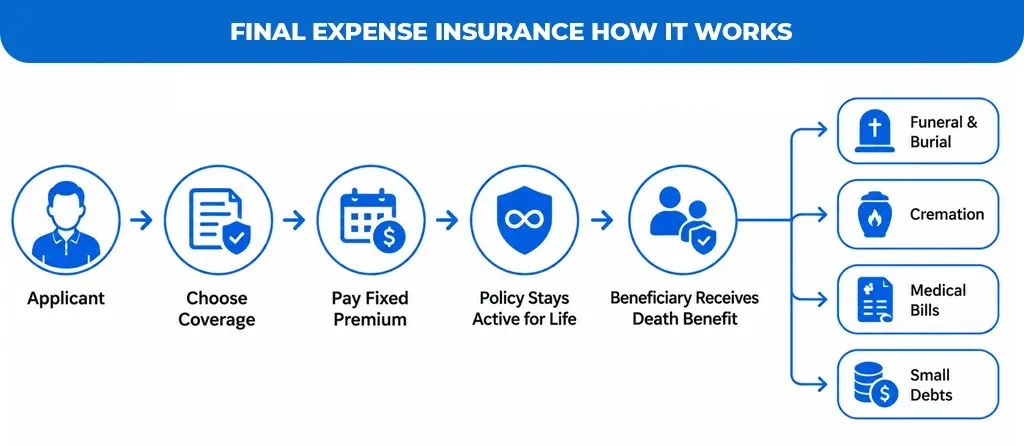
The distinguishing feature is underwriting. A standard term or whole life policy usually requires a medical exam for larger coverage amounts, while final expense insurance is typically underwritten through simplified issue (a short list of health questions) or guaranteed issue (no health questions at all). That trade-off is what makes the coverage accessible to seniors and people managing chronic health conditions, in exchange for a smaller death benefit and, in many cases, a higher cost per dollar of coverage than a comparable term policy.
When the insured dies, the insurer pays a tax-free death benefit directly to the named beneficiary. The payout isn’t restricted to funeral expenses; a beneficiary can use it for any purpose. In practice, most families apply it to:
- Funeral home services, burial, or cremation costs
- Caskets, urns, vaults, and cemetery or burial plot fees
- Outstanding medical bills or hospice care not covered by other insurance
- Small remaining debts, such as credit card balances or final utility bills
Why Final Expense Coverage Exists: The Cost Gap
Two figures explain why final expense insurance exists. According to the National Funeral Directors Association’s General Price List Study, the national median cost of a funeral with viewing and burial is $8,300, and a funeral with viewing and cremation runs about $6,280. Neither figure includes the cemetery plot, burial vault, or headstone, which the NFDA notes can add several thousand dollars more, and funeral costs vary by region, with the Northeast generally running above the national median.
Social Security does provide a one-time lump-sum death payment, but according to the Social Security Administration and a Congressional Research Service report, that payment has been capped at $255 since 1954 and is limited to an eligible surviving spouse or dependent child. It was never designed to cover a modern funeral, and it doesn’t come close. Final expense insurance exists to close the gap between what a funeral costs today and what a family typically has on hand in cash.
When to Choose Which
Final expense insurance tends to fit seniors, or anyone with a health condition that would complicate traditional underwriting or push term insurance premiums higher than the coverage amount justifies. If the goal is narrowly to keep funeral and final bills off your family, it’s usually the more efficient product, since you aren’t paying for underwriting complexity or a coverage amount you don’t need. Term life insurance remains the better fit for someone still working, with dependents, a mortgage, or income that would need to be replaced.
The Four Main Types of Final Expense Policies
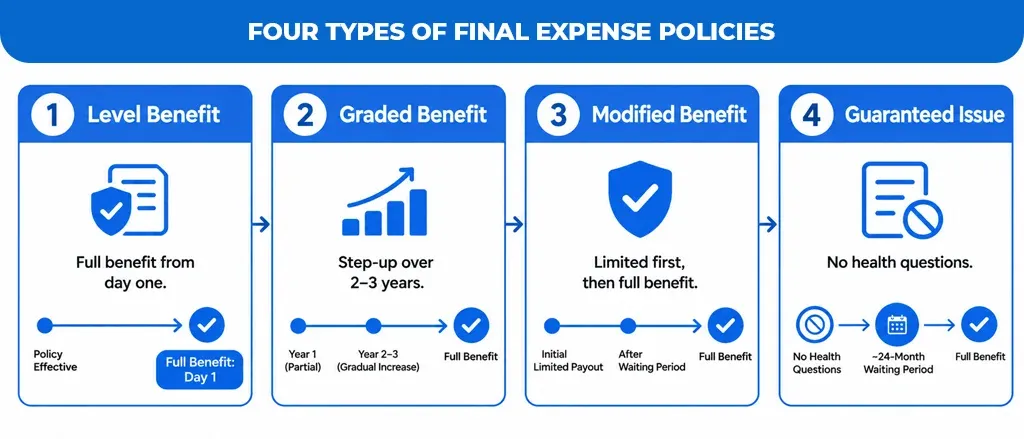
Final expense carriers generally sell coverage through one of four underwriting structures. The difference between them comes down to how much health information the insurer collects and how quickly the full death benefit becomes active.
- Level Benefit: Full coverage is active from day one once you’re approved. This is typically reserved for applicants who pass a simplified health questionnaire.
- Graded Benefit: Coverage steps up over the first two to three years. If death occurs from natural causes during that window, beneficiaries receive a reduced payout rather than the full face amount; accidental death is usually covered in full immediately.
- Modified Benefit: Similar to graded benefit, but the payout during the initial waiting period is typically limited to a return of premiums paid, plus interest, rather than any portion of the face value.
- Guaranteed Issue: No medical questions at all; approval is essentially automatic within the eligible age range, commonly 50 to 85. The trade-off is a waiting period, commonly around 24 months, before the full death benefit applies to a non-accidental death.
If you can answer a short health questionnaire and pass it, level benefit coverage is usually the better value, since the full death benefit is active immediately instead of after a waiting period. Guaranteed issue coverage is best reserved for applicants who would not otherwise qualify.
How to Calculate the Coverage Amount You Need
The right death benefit is the number that covers your local funeral costs, any debt you don’t want passed on, and a reasonable buffer, no more and no less. Overbuying raises your premium without adding meaningful protection.
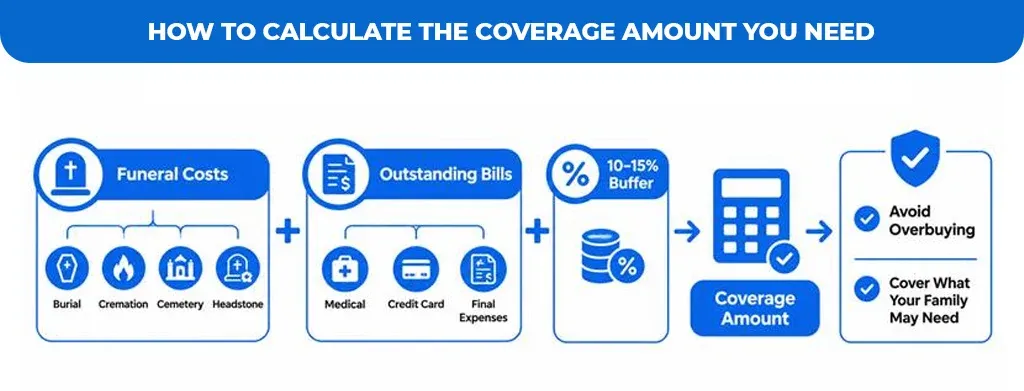
- Research local funeral costs for both burial and cremation. Pricing varies by region and by funeral home. The FTC’s Funeral Rule requires funeral homes to provide an itemized General Price List on request, which is the most accurate way to estimate your own local cost.
- Add any outstanding medical or credit card debt you’d want the policy to help clear, since these obligations don’t disappear at death and can fall to the estate.
- Build in a buffer, commonly cited as 10–15% of the total, for cemetery fees, a headstone, transportation, or other add-ons that aren’t included in published funeral averages.
If you’d like a more precise number based on your location, age, and existing coverage, a licensed agent can run the math against current local pricing rather than a national average.