



Introduction
Planning a funeral while grieving is one of the hardest things a family can face, and money worries only add to that weight. The good news is that you don’t have to guess. In 2026, the average cost of a funeral typically falls between $6,000 and $12,500, depending mainly on whether you choose burial or cremation, where you live, and which provider you work with.
So, how much does a funeral insurance policy cost, exactly, and where does all that money go? This guide breaks down real 2026 numbers for burial and cremation, walks through every line item on a typical bill, and shares practical ways to reduce costs without cutting corners on care or dignity. Whether you’re planning ahead or making decisions this week, you’ll leave with a clear picture of what to expect.
Understanding the Average Cost of a Funeral in 2026
When people search for how much a funeral costs on average, they’re usually comparing two very different paths: burial and cremation. Nationally, a traditional funeral with burial typically runs between $7,000 and $12,000, once you factor in embalming, a casket, a vault, and cemetery fees. A funeral involving cremation is generally less expensive, often landing between $6,000 and $7,000 when a memorial service is included.
These are national medians, not guarantees. Local pricing can swing significantly based on cemetery land values, funeral home overhead, and regional competition. The table below offers an at-a-glance comparison of the three most common service types.
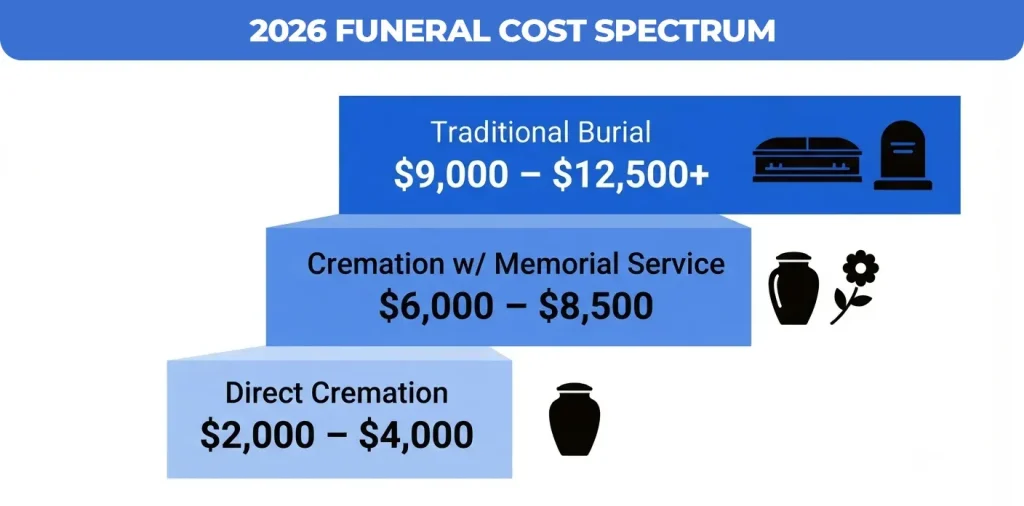
| Service Type | Typical Price Range (2026) |
| Direct Cremation | $2,000 – $4,000 |
| Cremation with Memorial Service | $6,000 – $8,500 |
| Traditional Burial (viewing + vault) | $9,000 – $12,500+ |
As a rule of thumb, a direct cremation with no service is the most affordable option, while a full traditional burial with a viewing, vault, and grave marker sits at the top of the price range.
Factors That Influence Your Final Funeral Bill
For what appears to be a comparable burial ceremony on paper, two families in the same city may pay drastically different amounts. Here’s why.
- Service Type: Burial almost always costs more than cremation because it requires a casket, a burial vault or liner (required by most cemeteries), and ongoing grave maintenance. This is the single biggest cost driver in any estimate of how much a funeral and burial costs versus a cremation-only option.
- Location: Urban areas with limited cemetery land tend to charge more for plots and opening/closing fees than rural counties. State-by-state differences are real. A family asking how much a funeral costs in Texas will often see a wider price spread between a small-town provider and a major metro funeral home as opposed to a family in a state with more consistent prices.
- Provider Choices: Full-service funeral homes bundle staffing, facilities, and coordination into a higher price, while budget-friendly or cremation-focused providers strip services down to the essentials. Comparing quotes from both is often the fastest way to find a lower cost figure.
- Hidden Fees: Death certificates (often $15–$25 each, and families usually need several), permits, obituary placement, and transportation of remains can add several hundred dollars that don’t always appear in a headline price.
Breakdown of Expenses: Burial vs. Cremation
Understanding exactly what you’re paying for makes it much easier to trim a bill without sacrificing what matters most to your family.
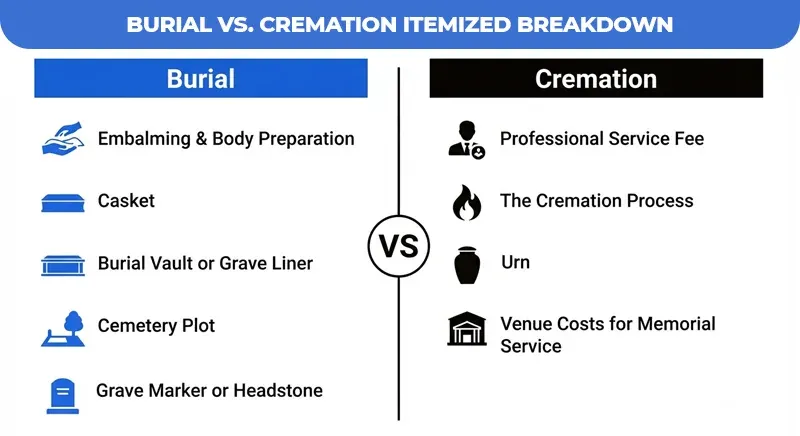
Typical Burial Expenses
- Embalming and body preparation
- Casket (ranges from a few hundred dollars for a simple option to several thousand for solid hardwood or metal)
- Burial vault or grave liner, required by most cemeteries
- Cemetery plot a major variable if you’re pricing out how much a funeral plot costs, since urban plots can run several times the price of a rural one
- Grave opening and closing fees
- Grave marker or headstone
Typical Cremation Expenses
- Professional service fee (a base fee every funeral home charges regardless of the option selected)
- The cremation process itself
- An urn, which can range from a simple container to a decorative keepsake piece
- Venue costs if a memorial service is held separately from the cremation
Budget-Friendly Tip: Families weighing how much does a funeral cost with cremation versus burial can often save further by choosing refrigeration instead of embalming when state law allows it, and by purchasing a casket or urn from a third-party retailer rather than the funeral home, as federal law requires funeral homes to accept outside caskets without a markup or penalty fee.
How to Manage and Reduce Funeral Costs
A lower bill doesn’t have to mean a less meaningful goodbye. These strategies help families spend intentionally rather than by default.
- Shop Around: Under the FTC Funeral Rule, every funeral home in the U.S. is legally required to give you an itemized General Price List (GPL) on request, over the phone, or in person. Comparing two or three GPLs is the single most effective way to answer how much does it costs for a funeral in your area before committing to anything.
- Consider Direct Options: Direct burial and direct cremation skip embalming, viewings, and elaborate caskets, cutting the bill dramatically. These are often the most affordable answers to how much does a basic funeral cost.
- Alternative Venues: Holding a memorial at a church, community center, or family home instead of renting a funeral home chapel can save hundreds to thousands of dollars, especially when combined with cremation.
Funding the Future: Financial Planning for Final Expenses
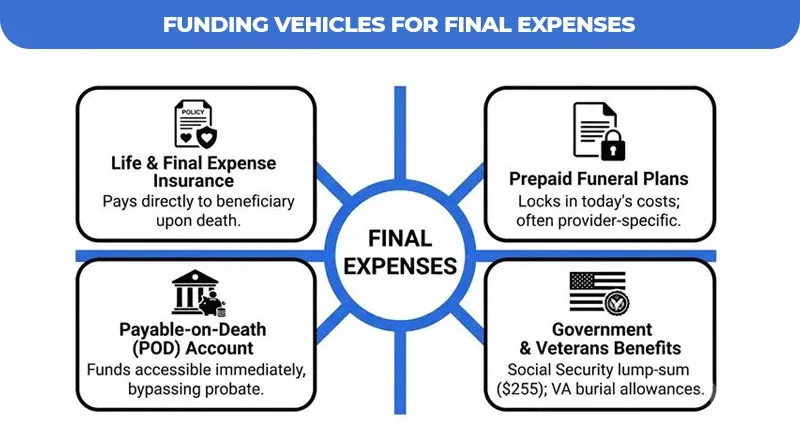
Proactive planning is the best defense against a stressful, expensive scramble later. A few of the most common approaches:
- Life insurance and final expense insurance are small, specialized plans (often with coverage of $5,000 to $25,000) that are intended to pay out to beneficiaries promptly and cover funeral expenses.
- Payable-on-Death (POD) Accounts: A simple bank account designation that lets a named beneficiary access funds immediately after death, without waiting on probate, a straightforward way to set aside money earmarked for final expenses.
- Prepaid Funeral Plans: These lock in today’s prices with a funeral home of your choice, which can be a real advantage given how much does a prepaid funeral plan cost tends to rise each year. The tradeoff is flexibility: plans are often tied to one provider and may be difficult to transfer or refund if your family relocates or preferences change.
- Government and Veterans Benefits: Social Security may provide a modest one-time death benefit for qualifying survivors, and the VA offers burial allowances and access to national cemeteries for eligible veterans. It’s worth checking eligibility before assuming a family must cover 100% of the bill alone.
Funding Vehicles for Final Expenses
Regional Cost Snapshot
Funeral costs aren’t uniform across the country. Here’s a quick look at three frequently asked-about states.
| State | What Drives the Local Price |
| Texas | Wide range between metro areas (Houston, Dallas, Austin) and rural counties; cemetery plot and vault costs vary the most. |
| California | Higher-than-average funeral home and cemetery fees, especially in coastal metro areas; cremation is more common and helps offset the overall cost. |
| Georgia | Costs generally track the national median, with lower cemetery plot prices outside metro Atlanta. |
Conclusion
Navigating how much does a funeral cost in 2026 can be daunting, but knowledge serves as your most powerful tool for securing a meaningful, dignified farewell without financial strain. By understanding the essential breakdown between burial and cremation, leveraging your legal right to compare itemized price lists, and exploring smart funding options, you can confidently honor your loved one while protecting your family’s financial future.
Take control today by starting open conversations with your family and requesting transparent, written estimates from local providers before making any final commitments. With proactive planning and informed choices, you can effectively navigate these significant expenses, ensuring that you manage your budget intentionally and find peace of mind during this challenging time.