

Introduction
Picture this: you wake up one morning and can’t get out of bed without help. Maybe it’s a surgery you didn’t see coming, a difficult pregnancy, or a back injury that makes sitting at a desk impossible. Your rent is still due on the first. Your grocery bill doesn’t pause. And your paycheck, the one thing your entire budget depends on, suddenly stops.
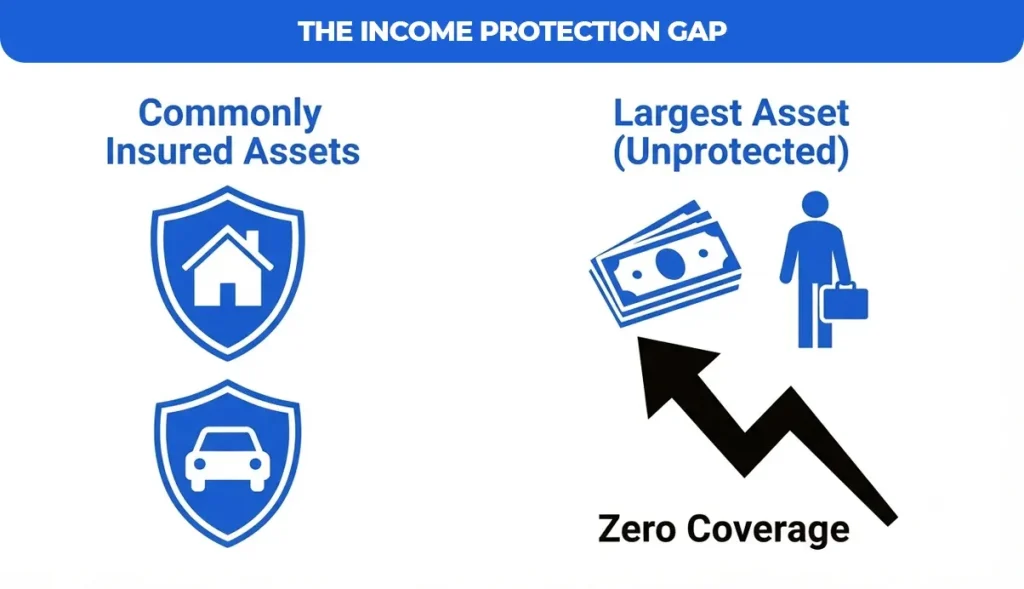
Most people insure their home against fire and their car against a collision, yet leave their single biggest asset completely exposed: their ability to earn an income. Short-term disability insurance is designed to fill that gap. It’s a financial safety net that replaces a portion of your salary while you’re medically unable to work, so a health setback doesn’t automatically become a financial crisis.
This guide covers exactly how short-term disability insurance works, how it’s different from long-term disability insurance, and the concrete steps to get a policy in place, whether through your employer or on your own.
What Is Short-Term Disability Insurance?
Short-term disability insurance is a policy that replaces part of your paycheck for a limited time when a non-work-related injury or illness keeps you from doing your job. It’s designed for temporary, recoverable conditions, not permanent ones. Common covered events include recovery from surgery, complications from pregnancy or childbirth, a broken bone, or a serious short-term illness.
Core Features
- Income Replacement: Most policies replace 40% to 70% of gross salary, and some employer plans go as high as 80%.
- Duration: Benefits typically run anywhere from a few weeks up to about 52 weeks, depending on the policy and the diagnosis.
This is where short-term disability income insurance earns its keep: it keeps rent, groceries, utilities, and even tuition payments moving while you’re not earning a paycheck. Without it, many households would need to lean on credit cards or drain savings within the first month of an unpaid leave.
How Does Short-Term Disability Insurance Work?
Understanding how short-term disability works starts with two pieces: the elimination period and the claims process.
The Elimination Period
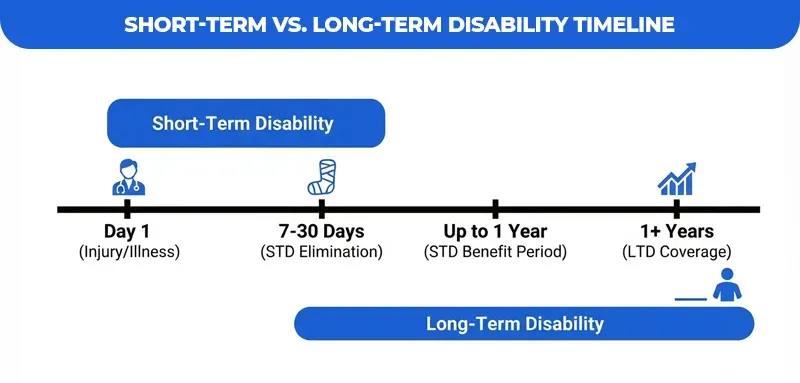
The elimination period is the waiting period between the day your disability begins and the day benefit payments actually start. Most policies set this between 7 and 30 days. During this stretch, you’re generally expected to use accrued sick leave or PTO, since the policy isn’t yet paying out.
The Claims Process
- File the claim promptly: As soon as you know you’ll be out of work, notify your HR department or life insurance provider and request the claim forms.
- Submit medical documentation: Your physician must complete a report confirming the diagnosis, functional limitations, and expected return-to-work date. Claims are routinely denied for incomplete or vague paperwork, so accuracy here matters.
- Provide ongoing certification: Providers may require updated notes from your doctor every few weeks to confirm you’re still unable to work.
Integration With Other Benefits
Short-term disability insurance rarely operates in isolation. Many employers require you to exhaust PTO or sick leave before benefits begin, and some plans coordinate with workers’ compensation if there’s any question about whether an injury was work-related. It’s worth noting that short-term disability and the Family and Medical Leave Act (FMLA) solve different problems: FMLA protects your job and guarantees unpaid leave, while disability insurance replaces the income during that leave. Many employees use both together, FMLA for job protection, and short-term disability insurance for the paycheck.
Pro-Tip: Ask your HR team for the plan’s ‘Summary Plan Description,’ not just the benefits brochure. The brochure sells the plan; the Summary Plan Description defines the elimination period, benefit duration, and exact definition of disability that will govern your actual claim.
Key Differences: Short-Term vs. Long-Term Disability Insurance
Short and long-term disability insurance are frequently confused, but they’re built for different timelines and different kinds of medical events. Here’s a side-by-side comparison:
| Feature | Short-Term Disability | Long-Term Disability |
| Coverage Duration | A few weeks up to ~1 year | Several years, or until retirement age |
| Purpose | Temporary recovery (surgery, pregnancy, short illness) | Long-term or permanent disability |
| Benefit Percentage | 40%–70% (up to 80% on some plans) | Typically, 50%–60% of the salary |
| Elimination Period | 7–30 days | 90–180 days (often after short-term ends) |
The two policies are designed to work in tandem. Short-term disability insurance covers the initial weeks or months of a medical leave; if the condition drags on past that window, long-term disability benefits are structured to pick up where short-term coverage leaves off. This is why financial advisors generally recommend carrying both short-term and long-term disability insurance rather than treating them as an either/or decision.
Key Takeaway: If your employer only offers one type of coverage, ask which one. Short-term-only leaves you exposed to conditions that stretch past a year; long-term-only leaves a painful income gap during the elimination period. The strongest income protection strategy uses both.
How to Get Short-Term Disability Insurance Coverage
Employer-Sponsored Plans
Employer-sponsored benefits are the most common way people access short-term disability insurance. Group plans are usually cheaper than individual policies because the employer negotiates rates across the whole workforce, and premiums are often deducted directly from payroll. The tradeoff is that you typically can’t customize the benefit percentage, elimination period, or duration; you get whatever the group plan offers.
Individual Policies
If your employer doesn’t offer coverage, or the group plan’s benefit percentage is too low, private short-term disability insurance is available on the open market. This is also the route for the self-employed, freelancers, and business owners who have no employer plan to fall back on. Individual short-term disability insurance for individuals typically costs more than group coverage but offers more control over the definition of disability, the benefit amount, and how long payments last.
- Compare quotes: Get short-term disability insurance quotes from at least three carriers, since pricing and definitions vary significantly between insurers.
- Review definitions: Confirm whether the policy uses an ‘own occupation’ or ‘any occupation’ definition of disability, and check whether maternity leave and pregnancy are explicitly covered.
- Check for gaps: If you already have group coverage through work, a supplemental individual policy can close the gap between the group benefit percentage and your actual take-home pay.
Factors Influencing Your Insurance Costs
Individual Variables
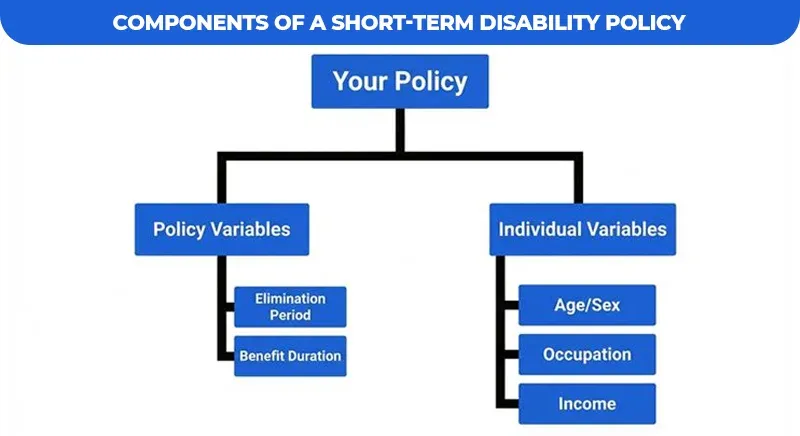
Premiums for short-term disability insurance plans are priced around risk. Age, sex, and occupation all factor in, since some jobs (construction, healthcare) carry a statistically higher likelihood of a disabling injury than others (desk-based roles). The amount of income replacement you select also drives cost directly: choosing 70% wage replacement instead of 50% will raise your premium.
Policy Variables
You have some control over your premium through policy design. Choosing a longer elimination period, say, 30 days instead of 7, lowers your monthly premium because the insurer is on the hook for fewer weeks of benefits. That only makes sense if you have enough PTO or emergency savings to bridge the longer gap before payments start.
Conclusion
Short-term disability insurance won’t prevent an injury, an illness, or a difficult pregnancy. What it does is make sure that when one of those events happens, your rent still gets paid, your family still eats, and you can focus on getting better instead of scrambling to cover next month’s bills. It belongs in the same conversation as home insurance and auto insurance, because your paycheck is arguably the asset all of those other policies depend on.
Take ten minutes this week to pull up your employer’s benefits booklet and check whether short-term disability coverage is included, and if so, what percentage of your salary it replaces. If it isn’t offered, or the coverage falls short, reach out to a licensed insurance provider for short-term disability insurance quotes tailored to your income and occupation. A few minutes today can save months of financial stress later. Get your quote and put your safety net in place before you need it.