


Introduction
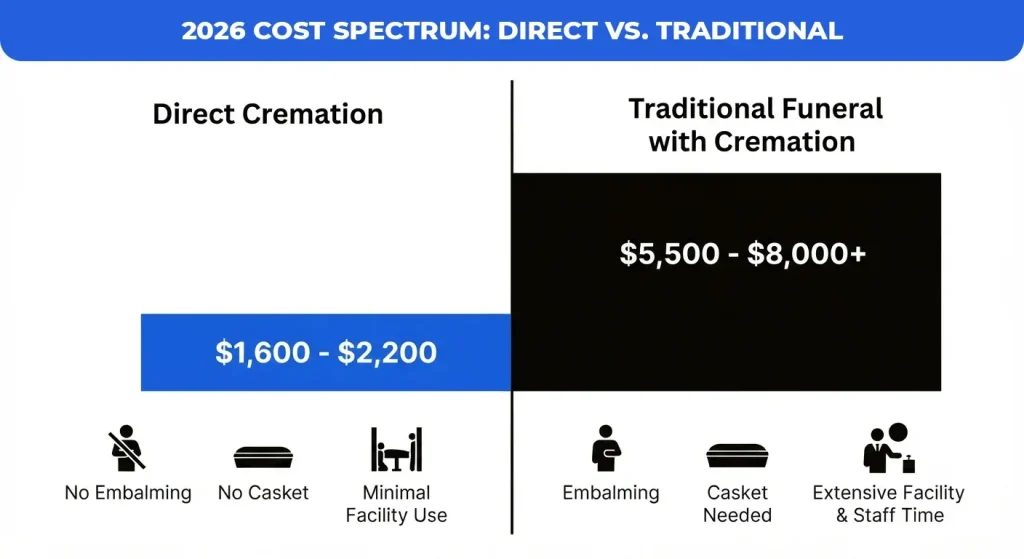
Direct cremation costs between $1,000 and $3,600 nationally in 2026, with most families paying around $1,600 to $2,200. A traditional funeral service followed by cremation typically runs $5,500 to $8,000 or more, once viewing, embalming, and facility fees are added. The exact figure you’ll pay depends heavily on your state, the type of provider you choose, and which optional services you add, which is exactly what this guide will help you sort out.
Cremation costs now account for the majority of final arrangements chosen by American families, and that share continues to grow each year as households look for a dignified option that costs less and offers more flexibility in timing. Based on current 2026 market data pulled from national funeral-cost trackers and state funeral board disclosures, this guide breaks down realistic price ranges and explains what actually drives the cost up or down.
The Average Cost of Cremation: What to Expect
Pricing for cremation isn’t a single number; it’s a spectrum shaped by the level of service you select. The table below contrasts the two ends of that spectrum: a no-frills direct cremation versus a full traditional funeral service that ends in cremation costs instead of burial.
| Category | Direct Cremation | Traditional Funeral with Cremation |
| 2026 National Average | $1,600 – $2,200 (range: ~$1,000–$3,600) | $5,500 – $8,000+ |
| Body Present at a Service? | No | Yes, typically with viewing |
| Embalming Required? | No | Usually, for viewing |
| Casket Needed? | No basic alternative container only | Yes, often a rental or purchased casket |
| Facility/Staff Time | Minimal | Extensive viewing room, chapel, and staff |
| Best For | Budget-conscious families, private memorials later | Families who want a formal farewell before cremation |
These figures are national estimates and will shift depending on where you live. Coastal and high cost-of-living states (Connecticut, New York, California) tend to sit at the top of these ranges, while parts of the South and Mountain West (Mississippi, Oklahoma, Arizona) often come in lower.
Factors That Influence Cremation Pricing
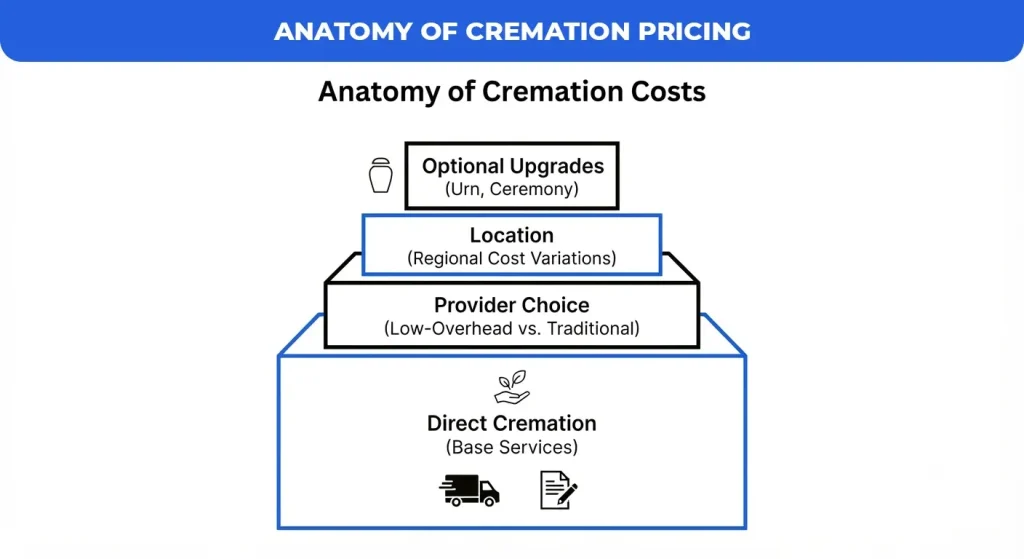
Cremation prices vary widely because the final invoice is really a stack of separate decisions, not one fixed fee. Understanding each layer helps you see exactly where your money is going and where you have room to cut costs without sacrificing what matters to your family.
Direct vs. Full-Service
A direct cremation involves body removal, basic paperwork, the cremation costs itself, and return of the remains, nothing more. A full-service arrangement layers in embalming, a viewing or visitation, a formal ceremony, and staff time to coordinate all of it. Each additional layer adds a discrete charge, which is why the gap between the two tiers can exceed $5,000.
Provider Choice
Traditional funeral homes carry the cost of showrooms, chapels, and full-time staff, and those fixed costs get distributed across every family they serve. Dedicated cremation costs providers and third-party crematories, by contrast, often operate with a fraction of that overhead, which typically translates into meaningfully lower direct cremation quotes for comparable service.
Location
Where you live matters more than most families expect. Urban centers with higher rent and labor costs generally charge more for the identical service offered in a rural area an hour away. It’s common for the same basic direct cremation costs to differ by $500 to $1,000 or more between neighboring counties.
Required Add-Ons
Certain items aren’t optional, no matter which tier you choose:
- Death certificates typically have a per-copy fee set by the county, often needed in multiples for banks, insurers, and the DMV
- Transportation/removal: moving the body from the place of death to the funeral home or crematory
- A basic, combustible container is required by most crematories, though a rigid cardboard version is inexpensive
- Permits and filing fees, and administrative costs tied to the cremation costs authorization
| Pro-Tip:Ask specifically whether the quoted price already includes the mandatory container and a set number of death certificate copies. Providers sometimes quote a headline number that excludes both, then add them back in at the signing table. |
Understanding Your Options: Choosing the Right Service
Most families choose from three broad service tiers. The most control you have over the final cost is to match the appropriate tier to your family’s needs rather than going with whatever the funeral home recommends first.
- Direct Cremation: The most cost-effective option. The body is cremated shortly after death with no viewing or ceremony beforehand. Families are free to hold a private memorial, celebration of life, or scattering ceremony later, on their own schedule and often at a fraction of a funeral home’s facility rate.
- Cremation with Memorial Service: A middle-ground option. Cremation costs happen first, and the family holds a separate gathering afterward, sometimes with the urn present, at a location of their choosing (a home, place of worship, or community space). This preserves the ceremony while avoiding embalming and viewing costs.
- Traditional Funeral with Cremation: A full viewing and funeral service with the body present, followed by cremation instead of burial. This tier carries most of the cost structure of a conventional funeral mbalming, including a rented or purchased casket, facility time, and cremation, simply replacing the cemetery plot and vault at the end.
Hidden Costs and How to Avoid Them
The advertised or headline price is rarely the full story. Use this checklist during the arrangement conference to spot fees that should be disclosed upfront versus those that are simply optional upsells.
- Transportation/Removal Fees: Confirm the mileage radius included in the base price. Transport beyond a set distance (commonly 30–50 miles) often triggers an extra per-mile charge.
- Urn Costs: You are not legally required to buy an urn from the funeral home at all, let alone a premium one. A simple, inexpensive container is perfectly permissible, and outside urns can be purchased separately and brought in without a handling fee in most states.
- Administrative Fees: death certificates and permit costs are usually billed per copy order, only as many as you’ll realistically need for banks, insurers, and titling agencies to avoid paying for extras.
| Hidden Reality:The single most overlooked upsell isn’t a product; it’s the ‘basic services fee,’ a non-declinable administrative charge every provider sets independently. It’s the one number worth comparing most closely across providers, since it applies no matter which tier of service you choose. |
Planning Ahead: How Pre-Planning Saves Money
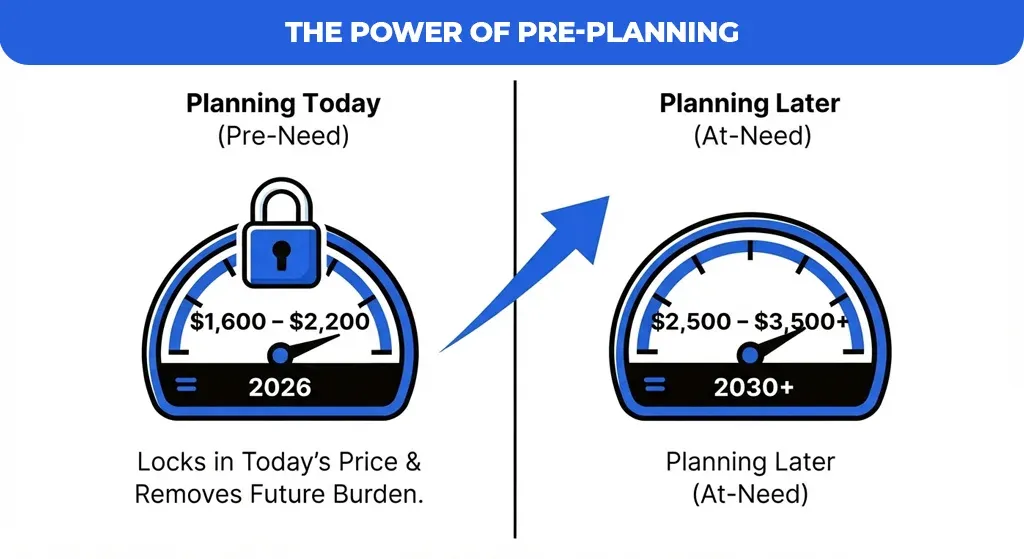
Arranging cremation costs in advance does two things at once: it locks in today’s pricing before costs rise further, and it removes a heavy layer of decision-making from your family during a period of acute grief.
Comparison Shop Before You Commit
Call at least three different providers and ask for an itemized quote for the exact same service. Prices for what looks like an identical direct cremation can differ by $1,000 or more within the same city, so this single step is often where families find their biggest savings.
Request the General Price List (GPL)
Under the FTC’s Funeral Rule, every funeral provider is legally required to give you a General Price List on request in person, by phone, or, following 2023 updates, in many cases online at no charge and with no obligation to purchase. Reviewing a GPL side-by-side across providers is the clearest way to compare true costs rather than marketing packages.
Consider Pre-Need Insurance or a Trust
A pre-need funeral insurance policy or a funded trust lets you set aside money specifically for cremation costs, often locking in current-year pricing with a specific provider. Compare this against a simple payable-on-death bank account, which offers similar fund-earmarking with more flexibility and typically fewer fees.
Conclusion
Taking control of your cremation costs requires prioritizing transparency and strategic decision-making to ensure you receive a dignified farewell without unnecessary financial strain. By comparing itemized General Price Lists across multiple providers and carefully selecting the specific service tier that aligns with your family’s unique needs, you can effectively bypass predatory upselling and manage your budget with confidence.
Don’t leave your legacy to chance; proactive pre-planning is the most powerful tool available to lock in current pricing and shield your loved ones from overwhelming emotional and economic burdens during a time of grief. Start your research today by requesting quotes from at least three different funeral homes to ensure you secure the respectful, cost-effective, and transparent service that your family truly deserves