



Standing in front of your closet with grief already weighing on you, wondering what to wear to a funeral, is a uniquely stressful kind of decision fatigue. You don’t want to get it wrong, but you also don’t have the emotional bandwidth to overthink it. The good news: appropriate funeral attire follows a small set of consistent principles, and once you understand them, dressing for any memorial service becomes far less overwhelming.
This guide walks through traditional expectations, modern and celebration-of-life variations, footwear and accessories, seasonal adjustments, and the most common mistakes to avoid so you can walk into the service focused on what actually matters: honoring the person who passed and supporting their family.
Understanding Traditional Funeral Attire
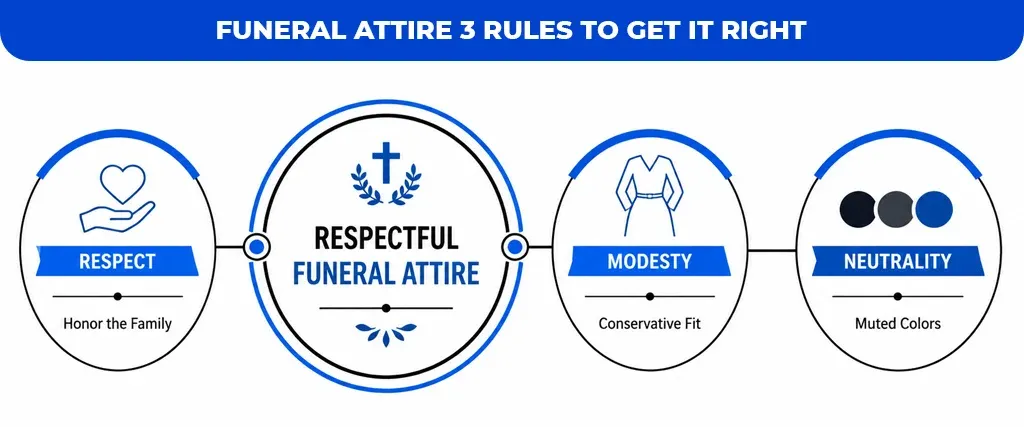
Traditional funeral attire is built around three ideas: restraint, modesty, and neutrality. These conventions exist for a simple reason: they keep the visual focus on mourning and remembrance rather than on any individual’s outfit.
Classic Mourning Colors
Etiquette authorities and funeral service providers consistently recommend conservative, muted tones. Safe choices include:
- Black the traditional standard for both men and women
- Navy a softer alternative that still reads as somber
- Charcoal gray professional and understated
- Deep brown or forest green acceptable in muted, matte finishes
Men’s Funeral Attire
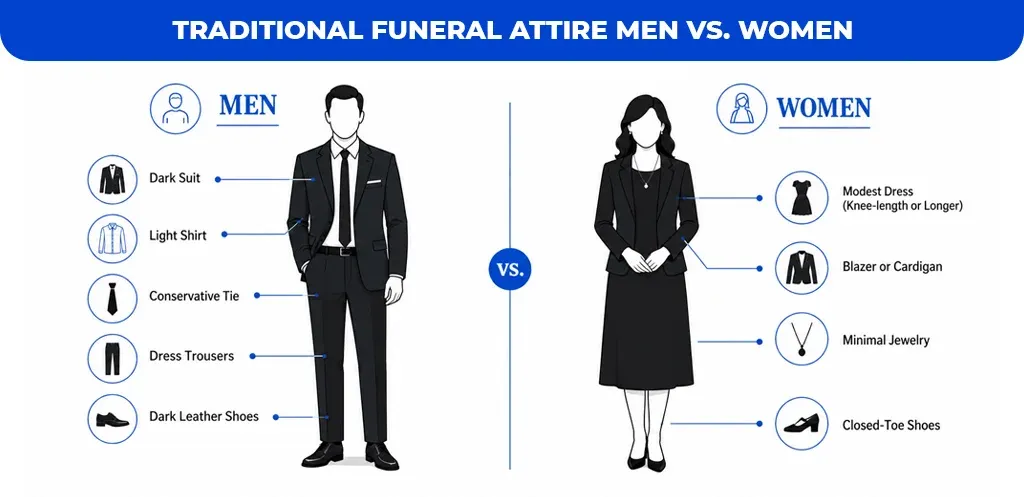
For men’s funeral attire, a dark suit remains the gold standard. If a full suit isn’t available, dress slacks, a white or light dress shirt, a conservative tie, and dark leather shoes create appropriate male funeral attire without requiring a full three-piece look. Men’s suit funeral attire should be freshly pressed; wrinkled or ill-fitting clothing reads as careless, even unintentionally.
Women’s Funeral Attire
Appropriate funeral attire for women centers on modest silhouettes: knee-length or longer dresses, tailored slacks, or a blouse paired with a blazer. Necklines and hemlines should stay conservative, and fabric should have enough structure that it doesn’t read as casual or overly form-fitting.
Modern and Non-Traditional Dress Codes
Not every service follows the traditional black-and-formal template anymore, and that’s worth planning around.
When Families Request Colorful Attire
Many families now host a “celebration of life” instead of, or alongside, a traditional service. In these cases, the family may explicitly ask guests to wear appropriate attire for a funeral in a specific color, often the deceased’s favorite color, or something bright and joyful rather than somber. Always follow the family’s stated wishes over generic etiquette rules. If an invitation or obituary specifies a dress code, that instruction overrides the default black-and-neutral standard.
Business-Casual and Relaxed Options
If the host specifies a casual or business-casual gathering common for smaller, informal memorials, clean dark jeans paired with a button-down shirt and blazer can strike the right balance. The goal is still solemnity, just with more flexibility in formality.
Modern Funeral Attire for Women
For those searching specifically for modern funeral attire female guidance: a well-tailored jumpsuit, a midi dress in a muted jewel tone, or a simple sheath dress with a structured cardigan all read as contemporary while remaining respectful. The key is intentionality, polished, not thrown together.
Footwear and Accessories: Keeping It Simple
Appropriate Shoes for a Funeral
Funerals often involve standing for extended periods, walking across grass at a graveside service, or navigating uneven cemetery ground. Prioritize comfort alongside formality:
- Closed-toe dress shoes, loafers, or oxfords for men; flats, low block heels, or closed-toe pumps for women
- Avoid stiletto heels on grass or gravel; they sink and can be a safety hazard
- Skip sneakers, flip-flops, and sandals unless the family has specified a casual dress code

Accessories and Jewelry
Keep accessories minimal and quiet, literally. Noisy bangles, oversized statement jewelry, and anything overly sparkling draw attention away from the service. A simple watch, small stud earrings, or a modest necklace are all appropriate.
Bags
A small, understated purse or a dark tote is practical without competing with the somber tone of the day.
Seasonal Considerations: Dressing for the Weather
Summer Funeral Attire
Warm-weather services call for breathable fabrics without sacrificing modesty:
- Lightweight cotton or linen blends in dark or muted tones
- Short sleeves are acceptable, but avoid sleeveless or strappy tops for a formal service
- Choose breathable, closed-toe shoes rather than sandals
Winter and Cold-Weather Attire
Cold weather adds a layering challenge, especially for graveside services:
- A dark wool coat over your outfit maintains the somber tone
- Scarves and gloves should stay in neutral, muted colors
- Choose boots with traction if the service includes an outdoor burial in snow or ice
What NOT to Wear to a Funeral
Knowing what to avoid is just as important as knowing what’s proper funeral attire. The most common funeral fashion mistakes include:
- Loud colors and patterns: neon shades, large graphic prints, or busy florals pull focus away from the service
- Graphic tees and slogans unless explicitly requested by the family for a themed celebration of life
- Athletic wear: gym shoes, sweatpants, and hoodies read as too casual for almost any funeral setting
- Beachwear: flip-flops, shorts, and tank tops are inappropriate even for outdoor summer services
- Heavy perfume or cologne: close quarters and heightened emotions make strong scents especially noticeable and, for some guests, physically uncomfortable
Conclusion
Choosing the right funeral attire ultimately comes down to respect, empathy, and mindfulness toward the grieving family. By defaulting to conservative styles, comfortable footwear, and muted tones unless the family requests otherwise, you ensure the focus stays where it belongs: on honoring the memory of the person you’ve come to remember and supporting those they left behind.
Looking for more guidance on life planning and securing your family’s future? Visit Assurance Gurus for expert insights, comprehensive guides, and resources tailored to your peace of mind.