

Planning for the future is never easy, especially when it comes to navigating end-of-life arrangements for yourself or a loved one. Beyond the emotional weight of these decisions, financial considerations play a massive role in every choice a family makes. One of the most common dilemmas families face is weighing the cost of cremation vs burial and figuring out which option fits their circumstances.
This comprehensive guide breaks down the true cost of cremation vs burial, examining hidden fees, side-by-side financial comparisons, smart ways to save, and actionable tips to help you make an informed choice without unnecessary financial stress. Whether you are comparing the average cost of cremation vs burial for advance planning or making an urgent decision for a loved one, understanding the numbers ahead of time can protect your family’s finances and peace of mind.
How Much Does Cremation Cost?
When people first start researching the cost of cremation vs burial, cremation almost always comes out as the more budget-friendly option. According to industry data compiled from the National Funeral Directors Association (NFDA), the national median cost for a full-service cremation that includes viewing and a ceremony runs in the neighborhood of $6,280 to $6,970, depending on the year and region.
That figure, however, covers a full-service cremation with a formal funeral experience. Families who choose a no-frills option can spend dramatically less.
Direct Cremation
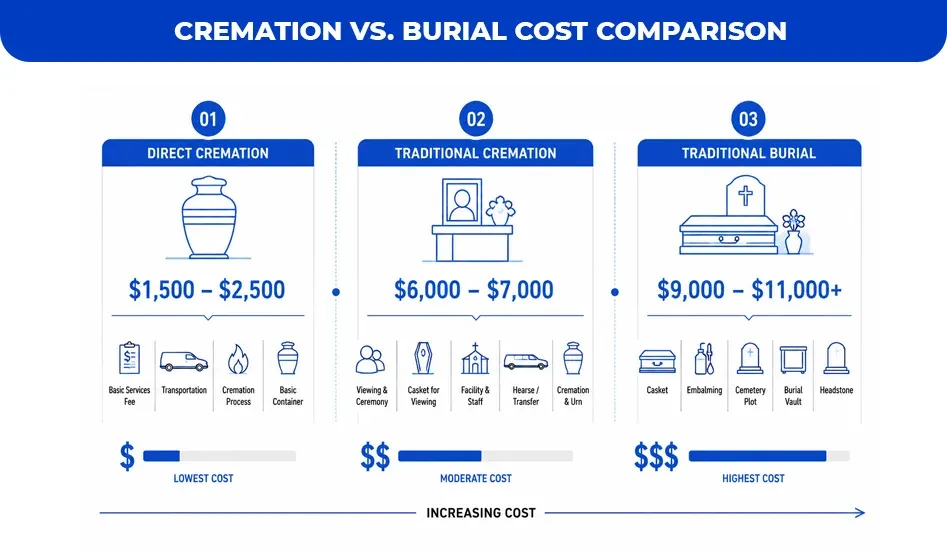
Direct cremation is the simplest and most affordable path. There is no viewing, no embalming, and no formal funeral service before the cremation takes place. Nationally, direct cremation typically costs between $1,500 and $2,500, though prices as low as $600 to $800 exist in highly competitive markets.
Traditional (Full-Service) Cremation
A traditional cremation follows the format of a standard funeral, just with cremation replacing burial at the end. This includes a viewing, a funeral service, and sometimes embalming. Because it involves more staff time, facility use, and goods, this option typically costs between $6,000 and $7,000.
The gap between these two paths is the single biggest lever families have when comparing the average cost of cremation vs burial: choosing a direct cremation over a full-service option can save thousands of dollars without sacrificing the ability to hold a separate memorial gathering later, on your own terms and budget.
What’s Included in Cremation Costs?
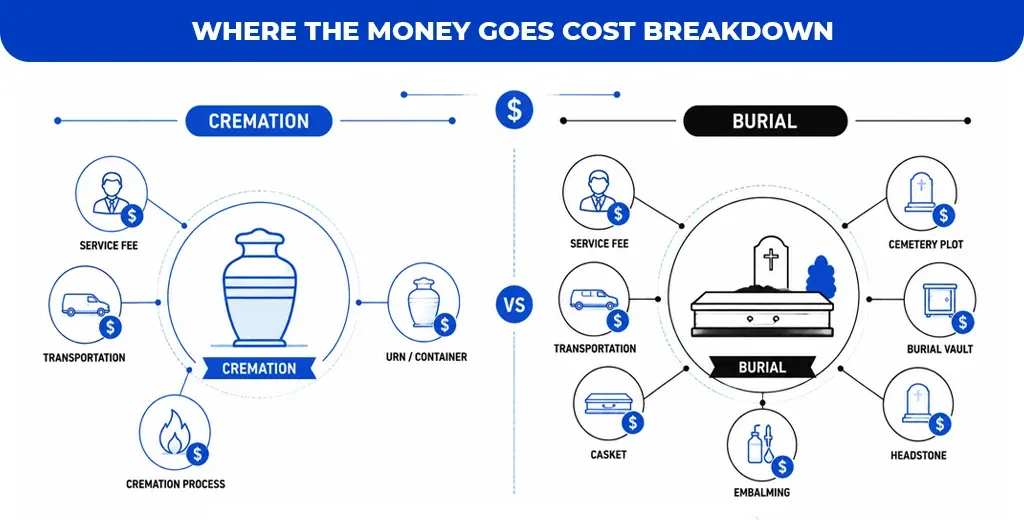
Understanding what you’re actually paying for helps you compare providers accurately and avoid overpaying for services you don’t need. Most cremation packages include a combination of the following line items.
- Professional service fee: A base charge every funeral home applies, covering staff time, administrative work, and use of facilities. This fee cannot be waived under FTC rules, but it also cannot be padded with bundled extras you didn’t request.
- Transportation and transfer of the deceased: Moving the body from the place of death to the funeral home or crematory.
- The cremation process itself and permits: The actual cremation, along with required county or state permits and a cremation authorization form.
- Basic or alternative container: A simple, combustible container required for the cremation chamber. This is not the same as a decorative urn, which is a separate, optional purchase.
Basic direct cremation packages bundle only the essentials above. Full-service cremation packages add embalming, a rented or purchased casket for viewing, use of the funeral home’s chapel, staff for the ceremony, and often a hearse or limousine. Comparing itemized General Price Lists (GPLs) side by side is the clearest way to see exactly where the cost of cremation vs burial diverges between providers.
How Much Does Burial Cost?
Traditional burial carries a heavier price tag than cremation, largely because it involves more physical goods and cemetery-related services. The median cost of a funeral with viewing and burial sits around $8,300 to $9,170, and climbs to roughly $9,995 to $11,040 once an outer burial vault is included. Figures that consistently show burial outpacing cremation in almost every cost comparison of cremation vs burial.
Casket Purchases
The casket is typically the single largest expense in a traditional burial. Prices range from around $2,000 for a basic model to $10,000 or more for premium hardwood or metal caskets. Because caskets carry high markups at many funeral homes, this is one of the best areas to comparison shop.
Embalming and Body Preparation
Embalming is not legally required in most states unless there will be a public viewing after a certain amount of time has passed, but many funeral homes present it as standard. Expect to pay $500 to $1,000 for embalming and related preparation, such as dressing, cosmetology, and casketing.
Viewing, Visitation, and Funeral Service Fees
Hosting a viewing or visitation adds facility rental, staffing, and coordination costs on top of the base service fee. A formal funeral service at a church or funeral home, followed by a procession to the cemetery, adds further staffing and transportation charges.
When people ask about the cost of cremation vs casket burial specifically, the casket and the cemetery-related fees below are usually what separates the two totals the most.
Cremation vs. Burial Cost: Side-by-Side Comparison
The table below lays out a clear, scannable snapshot of typical costs across the major categories, based on industry averages from the NFDA and consumer advocacy groups like the Funeral Consumers Alliance (FCA). Actual costs of cremation vs burial in Texas, California, or any other state will vary, so use this as a planning baseline rather than a quote.
| Expense Category | Direct Cremation | Traditional Cremation (with viewing) | Traditional Burial (with vault) |
| Funeral home service fee | $500 – $1,000 | $2,300 – $2,900 | $2,300 – $2,900 |
| Casket or urn | Basic urn or provided container: $0 – $300 | Cremation casket/urn: $200 – $3,000 | Burial casket: $2,000 – $10,000+ |
| Embalming/body prep | Not required: $0 | Optional: $0 – $1,000 | Often expected: $500 – $1,000 |
| Cremation or burial process | $300 – $600 | $300 – $600 | Included in service fee |
| Cemetery plot | Not applicable | Optional (for urn burial): $350 – $2,000 | $1,000 – $4,000 |
| Outer burial vault | Not applicable | Not applicable | $1,000 – $3,000 |
| Grave marker or headstone | Optional: $0 – $500 | Optional: $0 – $1,500 | $1,000 – $4,000 |
| Estimated total | $1,500 – $2,500 | $6,000 – $7,000 | $9,000 – $11,000+ |
As the table shows, the cost of cremation vs regular burial can differ by $5,000 to $9,000 or more once cemetery, vault, and marker expenses are factored in. This is why so many families now weigh the cost of green burial vs cremation as well; green burial eliminates embalming chemicals, metal caskets, and concrete vaults, often landing in a similar price range to a full-service cremation while keeping the body in the ground.
How to Pay for Cremation or Burial
Once you have a realistic estimate of the cost of cremation vs burial for your situation, the next step is figuring out how to fund it. Families typically draw on one or more of the following resources.
- Pre-need funeral insurance and burial insurance plans: These policies are purchased in advance specifically to cover funeral and burial or cremation costs, often locking in today’s pricing.
- Final expense policies and life insurance payouts: Smaller whole life policies designed to cover end-of-life costs, or the death benefit from an existing life insurance policy, can be used to pay for services.
- Personal savings and trusts: A dedicated savings account or funeral trust set aside in advance avoids placing the financial burden on grieving family members.
- Veterans’ benefits: The U.S. Department of Veterans Affairs offers burial allowances and, for eligible veterans, a burial plot and headstone at no cost in a national cemetery, which can meaningfully lower the average cost of burial vs cremation for military families.
Reviewing these options before a death occurs rather than during a crisis gives families far more room to compare providers and avoid rushed, expensive decisions.
How to Save on Cremation and Burial Costs
Regardless of which path you choose, there are proven strategies for lowering the overall cost of cremation vs burial without compromising on a meaningful farewell.
- Opt for direct cremation or a green burial: Both options strip out costly extras like embalming, elaborate caskets, and concrete vaults.
- Shop around and compare General Price Lists: Federal law requires funeral homes to provide an itemized GPL on request, making it easy to compare the cost of cremation vs burial across multiple providers in your area.
- Buy caskets and urns online: Under the FTC Funeral Rule, funeral homes cannot charge a handling fee for caskets or urns purchased from a third party, so buying online can cut this expense significantly.
- Separate the service from the disposition: Hosting a memorial gathering at a home, park, or place of worship instead of a funeral home chapel can reduce facility and staffing fees.
- Ask about package versus itemized pricing: Sometimes a bundled package is cheaper; other times selecting only the items you need is more economical. Always ask for both breakdowns.
The FTC Funeral Rule, established in 1984, exists specifically to protect consumers during these transactions. It guarantees the right to buy only the goods and services you select, receive an itemized price list, and use caskets or urns purchased elsewhere without a markup penalty.
How to Choose
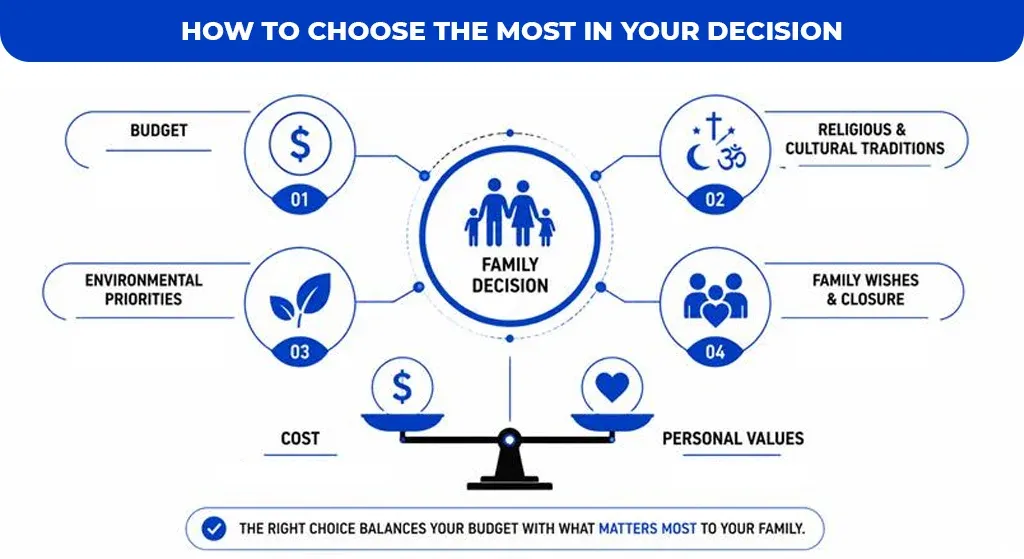
Cost is an important factor, but it isn’t the only one. The right choice balances your budget against personal, cultural, religious, and environmental values.
- Religious or cultural traditions: Some faiths require burial, while others permit or even prefer cremation. Confirm any requirements with a religious leader before finalizing plans.
- Environmental priorities: Green burial and, to a lesser extent, cremation both have smaller ecological footprints than a traditional embalmed burial with a metal casket and concrete vault.
- Family wishes and closure: Some families find a graveside service and permanent headstone important for grieving and future visits; others prefer the flexibility of scattering or keeping ashes.
- Advance planning versus urgent need: If you’re planning ahead, you have time to compare providers and lock in pre-need pricing. If a death has already occurred, focus on getting an itemized GPL quickly and asking direct questions about every line item.
Grief counselors and estate planners consistently recommend having this conversation with family members well before it becomes necessary, so that financial reality and personal wishes can be aligned calmly rather than under pressure.
Conclusion
Navigating end-of-life expenses can feel overwhelming, but understanding the true cost of cremation vs burial empowers you to make a choice that honors your loved one while protecting your family’s financial well-being. Whether you choose a simple direct cremation, a full-service cremation, a traditional burial, or a green burial, careful planning and open communication make all the difference.
At Assurance Gurus, we are dedicated to helping you secure peace of mind for your family’s future. Visit Assurance Gurus today to explore expert guides, financial planning tools, and comprehensive resources tailored to protect what matters most.