

Introduction
Choosing a funeral home is one of the most important decisions a family will make, and it is often made under tremendous emotional stress. A good funeral home does much more than handle the logistics. It becomes a trusted partner in the celebration of a life, in meeting legal requirements, and in guiding a grieving family through an unfamiliar process.
This guide tells you what to look for in a funeral home, how to compare costs legally and fairly, what types of services are available, and questions to ask before signing any contract. Whether you’re planning ahead or have an immediate need, this resource will help you make a confident, informed choice.
What Is a Funeral Home? What Services Do Funeral Homes Offer?
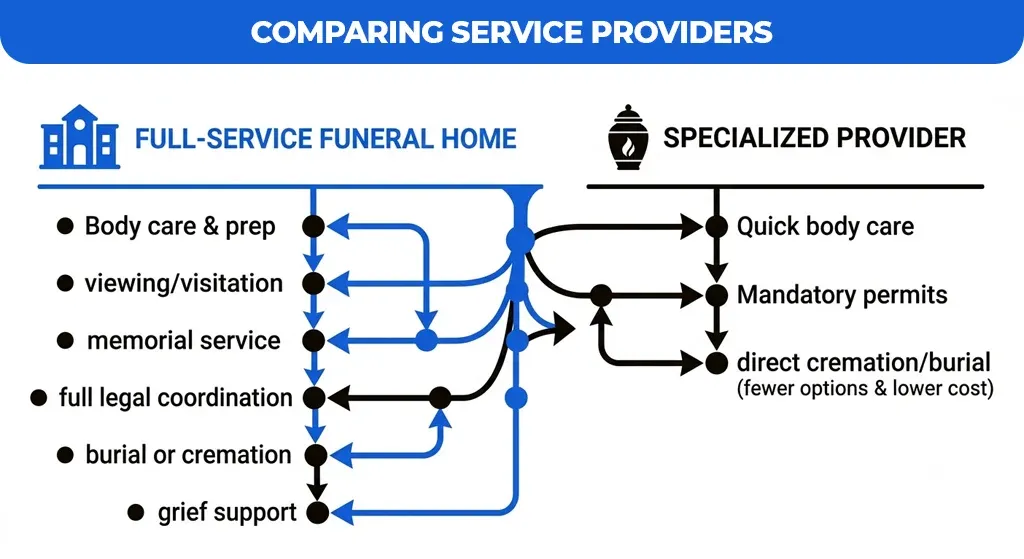
Funeral home – A licensed business that provides care for the dead and memorial services. Services include body preparation, legal paperwork, referrals to grief counseling, and help with obituaries. Full-service providers manage burial and cremation, while specialized providers focus on just one of the options.
Full-Service Funeral Homes and Specialty Providers
A heritage funeral home or a long-standing Johnson funeral home is a full-service funeral home that handles everything in one place that has to do with end-of-life. Direct cremation services are usually provided by companies that specialize solely in cremation and offer lower pricing with less opportunity for customization.
Legal and Administrative Services
A licensed funeral home handles the legal paperwork that must be completed quickly after a death. These duties generally involve:
- Death certificate to the state vital statistics office
- Getting burial, cremation, or transit permits
- Working with the medical examiner or attending physician to certify the cause of death
- Notifying the family on behalf of the family on Social Security, the VA, and other agencies
EXPERT NOTE PLACEHOLDER: Add comment from licensed funeral director on common documentation mistakes families should avoid.
Important Things to Look at When Choosing a Funeral Home
Assessment of a funeral home should include consideration of location, staff professionalism, reputation, and facility size. A provider such as Miller Funeral Home or Williams Funeral Home, which has been serving a particular community for several generations, usually reflects the continuity and reliability needed by families in times of crisis.
Location and Accessibility for the Family
Location is critical, particularly in terms of planning logistics with relatives who do not live locally. The convenience of having either the Davis Funeral Home or the Anderson Funeral Home nearby is important to help make it easier for the bereaved and to transport the body from the location of death to the home.
Reputation, Reviews, and Community Reputation
Reviews posted online tend to form a pattern. Note consistency in terminology used for compassion, openness, and responsiveness. A bad review on its own is less important than a pattern. Long-established local funeral homes, such as a brown-colored one or Adams https://assurancegurus.com/cremation-insurance/, can carry generations of reputation, something that new or corporate-run businesses might lack.
Professionalism of Staff: The First Visit
Arrange a first visit to the funeral home before you need one in an emergency. A professional member of staff must always provide comprehensive information on services offered, give answers to any questions raised without applying any kind of pressure, and tell you about the cost of services without your asking. Evasion, high-pressure selling, and manipulation are immediate warning signs.
Navigating Funeral Expenses: Your Rights as Enforced by the FTC Funeral Rule
The FTC Funeral Rule mandates that funeral homes offer consumers a GPL upon request, either in person or over the phone, prior to any purchase. You are legally able to choose just the services you desire. No provider can require you to buy a package.
Knowledge of the General Price List (GPL)
Each licensed funeral home must make available a GPL, which details the cost of each individual good and service. Demand for such a list is to be made right at the beginning of the consultation. If the provider is resistant or delays, this is an offense against the law. See ftc.gov/funeralrule for the FTC consumer guide to funeral prices.
Package Deals versus À La Carte Services
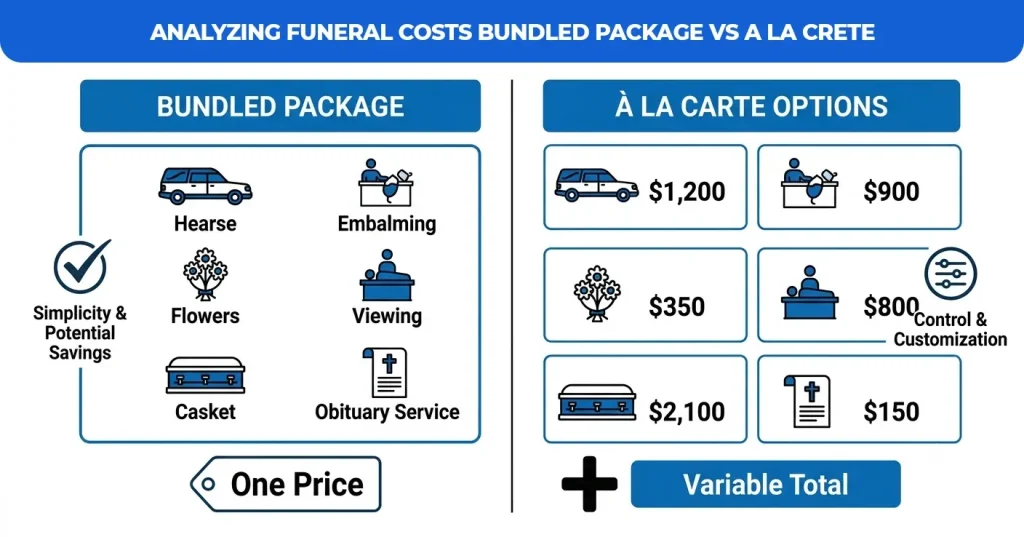
Bundled packages group multiple services at a stated discount but may include items you do not need. À la carte pricing allows precise control over what you spend. When comparing providers such as a Smith funeral home versus a Taylor funeral home, use the itemized lists, not the headline package prices, for a true cost comparison.
Items to request as individual line items include:
- Basic services fee (non-declinable per federal law)
- Embalming (not legally required in most states)
- Use of facilities for viewing or a ceremony
- Transportation: transfer of remains, hearse, and service vehicles
- Casket or urn (you have the right to supply your own)
- Death certificates (you require at least 8-12 copies)
Types of Services: Burial, Cremation, Green Burial, and Veteran Options
Funeral homes provide different ways to approach the end of life nowadays. There are several main choices available, such as traditional burial, cremation (with or without a memorial service), environmentally-friendly green burial, and veteran honors services.
Traditional Burial
Traditional burials consist of preparations for the body, viewing or visitation, funeral services, and burial of the body in the cemetery. It normally takes about 3-5 days to bury someone in such a way. There is considerable variation in costs across different regions, depending on the type of casket chosen and other cemetery charges.
Cremation Options
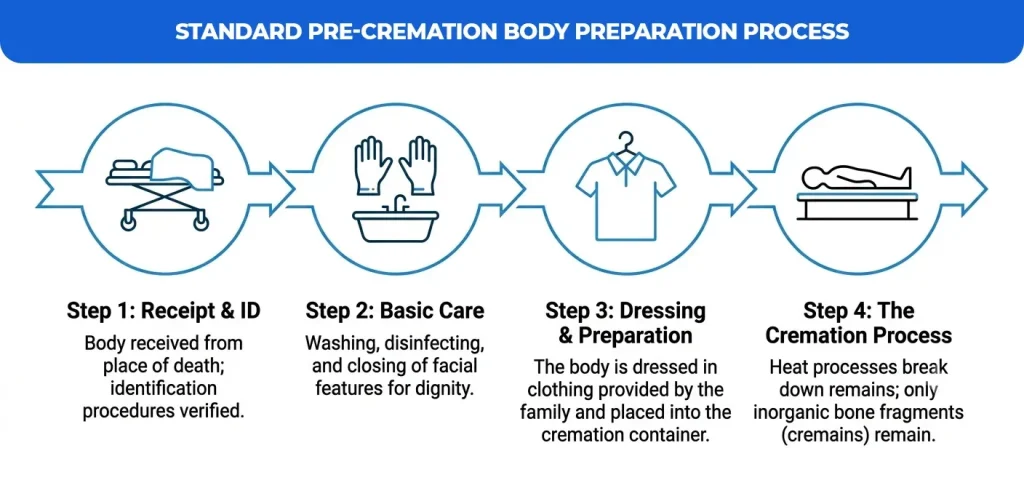
Cremation is now the most chosen option in the United States, according to NFDA data [INSERT CITATION LINK]. Two primary pathways exist:
- Direct cremation: There will be no viewing or funeral ceremony prior to the cremation of the deceased. Usually, the most inexpensive choice available. Both Bostick Tompkins Funeral Home and Stevens Funeral Home, with the services of direct cremation, can offer such an arrangement for those seeking a simpler alternative or a future memorial service.
- Cremation with memorial service: The cremation process is done, after which a ceremony is scheduled, with or without the presence of the urn. This arrangement maintains the traditions while providing greater scheduling options.
Green and Natural Burials
A green burial avoids the use of embalming fluids, metal caskets, and concrete vaults and makes use of natural, biodegradable products that make it possible for nature to take its course. In recent years, the demand for greener solutions has increased steadily.
Burial Benefits and Military Honors for Veterans
There are some federal burial benefits available for veterans. These include burial at a national cemetery, a government-provided grave marker, and a burial flag. The benefits of eligible veterans can also include Presidential Memorial Certificates. If you choose a veteran-oriented funeral home, like the ones associated with the Love Funeral Home Network, they will arrange the VA forms and the honor guards. It is important that you bring the veteran’s DD-214 discharge form to your first meeting.
Conclusion
The selection of a funeral home is more than just another transaction. Spending the effort to do the necessary research, find out your legal rights, and pose direct questions is not a sign of procrastination, but a show of respect for the dead individual and the bereaved family.
Choosing a funeral home is a deeply personal decision that balances emotional care with practical logistics. By researching your rights and planning ahead, you provide your family with much-needed clarity during a difficult time. Assurance Guru today for expert, compassionate guidance on selecting the right provider and honoring your final wishes.
Frequently Asked Questions
Are bodies drained of blood before they are cremated?
The bodies are not drained of blood prior to cremation. Blood, along with other bodily organs and tissues are left in place and decomposes in the extreme temperatures of the cremation process.
What do you understand by a funeral home?
It is a facility that renders services such as preparation of the body, planning of memorial services, handling of the paperwork related to death, and handling of funeral or cremation.
What is the price of cremation in Gastonia, NC?
Cremation prices in the Gastonia area vary depending on the services selected. Direct cremation normally costs between $700 and $1,500, while cremation with memorial services costs between $2,000 and $5,000.
What is the custom in America when a person dies?
Typically, when a person dies, it is customary to notify the funeral home to arrange for the body preparation and conduct a visitation. The services culminate with the funeral or memorial services and cremation or burial.