
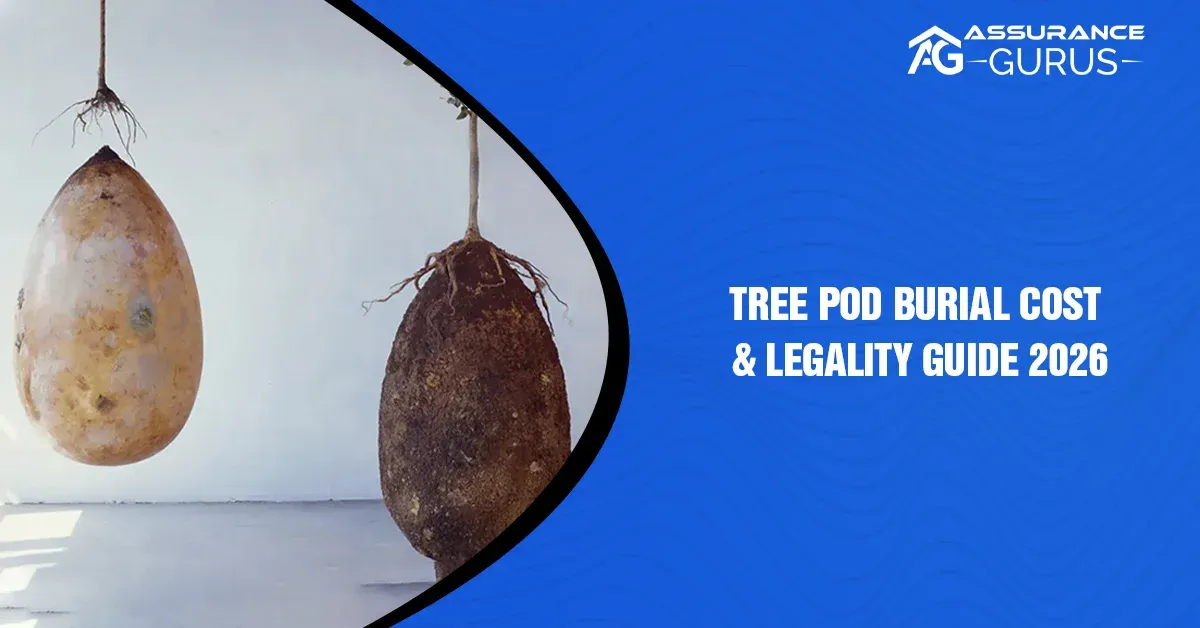

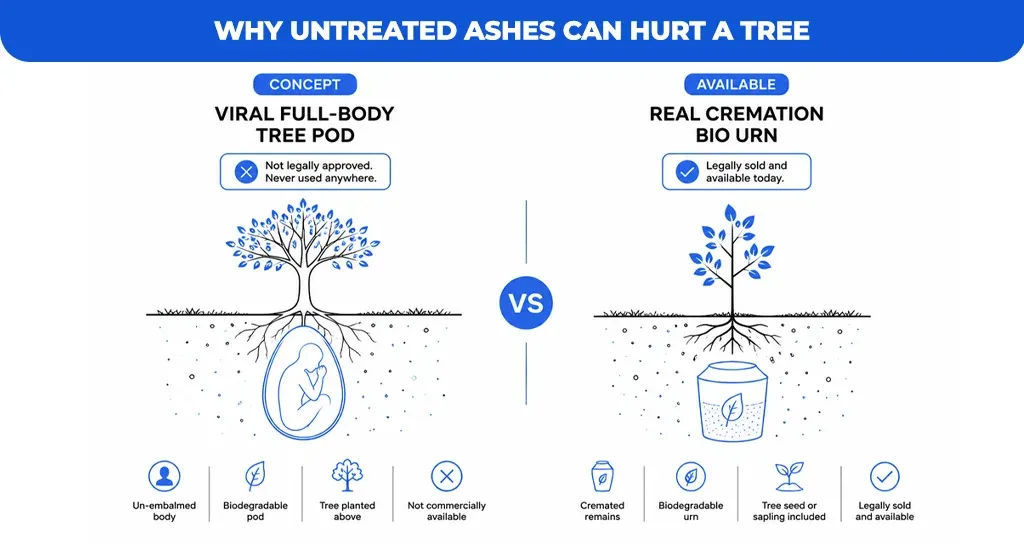
Tree pod burial is one of the most searched terms in green funeral planning, largely because of a viral image showing a body curled inside an egg-shaped pod with a young tree growing above it. That image is real artwork from an Italian design project, but the product it depicts has never been sold, approved, or used to bury a body anywhere in the world.
This guide separates the viral concept from what families can actually purchase today, explains how the cremation-based version works, and walks through the legal restrictions, realistic costs, and soil-chemistry requirements involved before you build an end-of-life plan around it.
| Quick Answer Tree pod burial is a green memorial concept in which remains are placed inside a biodegradable pod to nourish a tree. The full-body version has never been legally used anywhere in the world. What is real and commercially available is the cremation-based bio urn, priced roughly $129 to $457, plus cremation and planting costs. |
Key Takeaways
- The full-body tree pod popularized by Italy’s Capsula Mundi remains in a “development phase” and has never held a body anywhere, including in Italy, more than two decades after it was first unveiled.
- What is commercially available are biodegradable cremation urns designed to be buried with a tree, generally priced between $129 and $457.
- Raw cremated ashes carry a pH near 12 and sodium levels far above what most plants tolerate, so they must be diluted or chemically neutralized before a tree is planted with them.
- Human composting, also called natural organic reduction, is a legal, operating full-body alternative in 14 U.S. states as of 2026.
- A complete cremation-based tree pod burial, including the urn, cremation, and planting, typically runs from about $1,000 to $5,000 or more.
What Is Tree Pod Burial?
Tree pod burial refers to placing human remains, either cremated ashes or, in concept form, an un-embalmed body, inside a biodegradable pod alongside a tree seed or sapling so the tree draws nutrients from the remains as they break down. Only the cremation-based version of this idea is commercially sold in the United States today.
The Viral Origin: Capsula Mundi
The concept traces back to Capsula Mundi, an egg-shaped biodegradable capsule designed by Italian designers Anna Citelli and Raoul Bretzel and first shown at Milan’s design fair in 2003. Their vision placed an un-embalmed body in a fetal position inside the pod, with a tree planted directly above it to eventually replace a traditional cemetery with a living memorial forest.
According to Capsula Mundi’s own project site, the full-body pod remains in a development phase and is not commercially available; the company sells only a smaller biodegradable urn for cremated remains. More than 20 years after the design debuted, no full-body version has been legally used anywhere on Earth, and Italy, where the project originated, does not permit it.
What Capsula Mundi does sell today is an egg-shaped cremation urn, priced by different retailers at roughly $330 to $457, sold without a sapling, which is purchased separately.
Tree Pod Burial vs. Bio Urn: Know the Difference
Marketing and social media use overlapping terms, including tree pod burial, burial tree pod, pod burial tree, tree burial pod, and tree pod burials, almost interchangeably. In practice, all of these phrases describe the same underlying idea, but only one version of it is an actual, purchasable product: the biodegradable bio urn made for cremated remains.
How Does Tree Pod Burial Work?
There are two distinct methods behind the phrase, and understanding the difference is essential before making any funeral or estate plans.
The Full-Body Method (Still a Concept)
The theoretical full-body tree pod places an un-embalmed body inside a large organic capsule buried like a seed, with a tree planted directly above it. No provider currently offers this as a licensed, commercially available service anywhere, and disposition regulations in most jurisdictions require a body to be embalmed, cremated, or buried in an approved container within a licensed cemetery, standards an unproven capsule design does not yet meet.
The Cremation Method (What You Can Actually Buy)
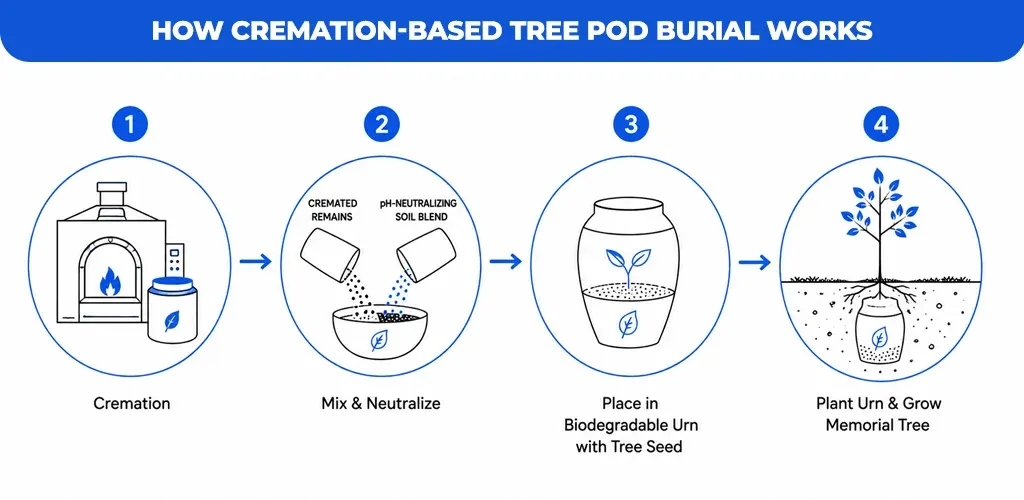
The version that is real and available begins with standard cremation. The ashes are then mixed with a soil-based, pH-neutralizing blend before being placed inside a biodegradable urn along with a tree seed or seedling. The urn is then buried at the base of the young tree, in a memorial forest, on private land where local law allows it, or in a cemetery plot.
Why Soil Chemistry Matters
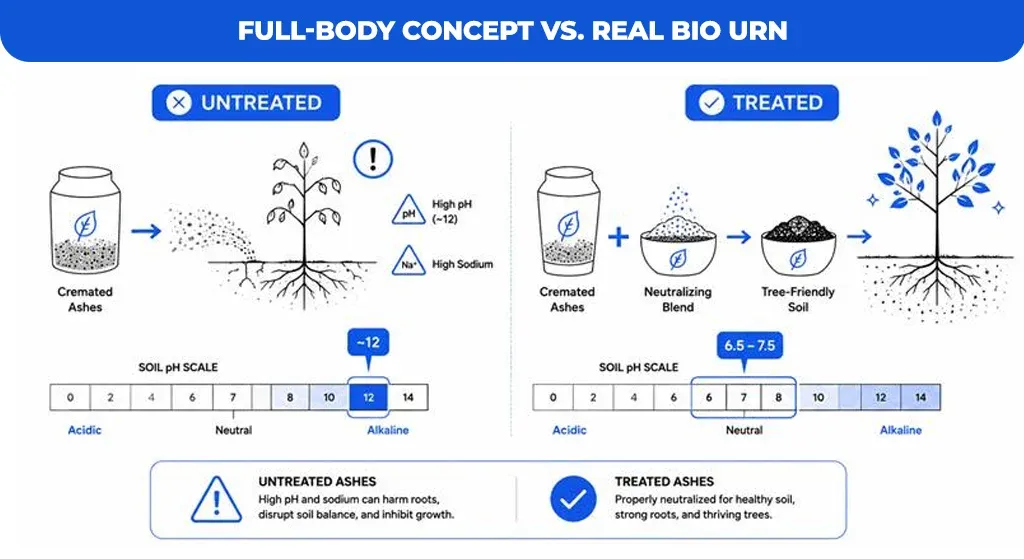
Cremated remains are not equivalent to compost or fertilizer. Untreated cremated ashes typically carry a pH around 12, comparable to bleach, and sodium concentrations estimated at 200 to 2,000 times what most plants can tolerate, according to horticultural sourcing on cremation and soil chemistry.
A 2022 peer-reviewed study published in Environmental Science and Pollution Research tracked vegetation in an ash-scattering garden over six years and found that roughly half of the monitored plant life had degraded to unhealthy or bare soil, with damage worsening where ashes were scattered repeatedly in the same location.
This is why reputable bio urn products include a separate pH-neutralizing, sodium-diluting agent that must be mixed with the ashes before planting; a seed or sapling placed directly into untreated cremains is at meaningful risk of failing to establish.
Is Tree Pod Burial Legal in the US?
Cremation-based tree pod burial is legal to purchase and use across the United States, though where the urn can actually be planted depends on state and local zoning, cemetery, and health regulations. The original full-body pod design is not legally available anywhere because no manufacturer has a commercially licensed product that meets body-disposition standards.
Full-Body Pod Burial Legality
So-called green burial is legal in some form in all 50 U.S. states, according to information compiled by Lincoln Heritage Life Insurance Company, but that legality applies to recognized natural burial methods, not to an unproven capsule design. Because the intact-body Capsula Mundi pod has never received regulatory approval anywhere, it simply is not an option a funeral home or cemetery can legally offer in the United States today.
Cremation-Based Tree Pod Legality
Because cremated remains are already a legally recognized form of disposition in every state, burying a bio urn with a tree is generally permitted, but each state maintains its own rules on where remains can be interred, whether a funeral director must be involved, and whether the site must be a licensed cemetery or memorial forest.
Human Composting: A Legal Full-Body Alternative
For families specifically drawn to the idea of a body becoming a tree, the closest legally operating equivalent is human composting, formally called natural organic reduction. As of 2026, it is legal in 14 states: Washington, Colorado, Oregon, Vermont, California, New York, Nevada, Arizona, Maryland, Delaware, Minnesota, Maine, Georgia, and New Jersey.
The process places the body in a reusable vessel with wood chips, alfalfa, and straw. Microbes break the body down over roughly 30 to 45 days, and the family typically receives approximately one cubic yard of finished soil, which can be used to plant a memorial tree or donated to a conservation project.
What States Allow Backyard Burial?
Most states technically permit burial on private property, provided the family obtains a death certificate and a burial-transit or disposition permit and complies with local zoning rules. California and Indiana are notable exceptions: both effectively require interment in a licensed cemetery for most residents under existing state statute.
Even in permissive states, county zoning codes, minimum acreage requirements, and setback distances from wells or water sources frequently restrict where a home burial, and therefore a backyard tree pod planting, can legally take place. Always confirm both state law and local zoning with the county health department or vital records office before planning one.
How Much Does a Tree Pod Burial Cost?
Total cost depends heavily on which version of the concept you are pursuing and whether cremation, urn, and planting fees are bundled by a single provider.
| Component | Typical Cost | Source |
| Biodegradable bio urn (Bios Urn, The Living Urn, Capsula Mundi cremation urn) | $129 – $457 | 8BillionTrees; GreenMatters/JoinCake |
| Direct cremation, no service | ≈$2,202 (median) | Funeralocity, cited by Choice Mutual |
| Cremation with viewing and memorial service | $6,280 (median) | National Funeral Directors Association (NFDA), 2025 Cremation & Burial Report |
| Complete cremation-based tree pod package (urn + cremation + planting) | $1,000 – $5,000 | PayForFunerals 2026 pricing guide |
| Human composting (full-body alternative, where legal) | Several thousand dollars | Industry pricing reporting on Recompose, Seattle, WA |
For comparison, the NFDA reports a median cost of $9,995 for a traditional funeral with burial and vault, and $6,280 for a funeral with cremation, viewing, and service, making a cremation-based tree pod burial meaningfully less expensive than either option in most cases.
Pros and Cons of Tree Pod Burials
The Advantages
- Creates a living, growing memorial in place of a traditional headstone.
- Reduces reliance on metal caskets, vaults, and non-biodegradable materials associated with conventional burial.
- Can provide ongoing emotional comfort to family members who visit and watch a memorial tree mature.
The Disadvantages
- Marketplace confusion between the viral full-body concept and the cremation-based bio urn products that actually exist.
- Strict geographic, zoning, and cemetery limitations on where a memorial tree can legally be planted.
- No guarantee the tree survives; families should have a contingency plan if a sapling fails to establish.
- Untreated cremated remains can harm or kill the very tree they are meant to nourish without proper neutralizing treatment.
Planning With Confidence
A tree pod burial, whether it means a cremation urn planted beneath a sapling or a fully composted return to the earth, is ultimately about leaving something living behind instead of a stone marker. Getting there requires separating what is genuinely available from what only exists as concept art, and making sure the choice is documented and funded well before it is needed.
Proactive planning removes the guesswork for the people you love during an already difficult time. Whether your family chooses a biodegradable bio urn, human composting, or a conventional green burial, having the right coverage in place ensures your wishes are honored without added financial strain.
Ready to put a plan in place? Get a personalized quote from Assurance Gurus and take the first step toward securing your family’s peace of mind.