


Funeral flowers are floral arrangements sent to a funeral home, church, or family residence to express sympathy after a death. They remain the most widely used way to convey condolences in Western mourning tradition, appearing as casket sprays, standing sprays, wreaths, and smaller basket or potted arrangements. Choosing the right flowers for a funeral depends on your relationship to the deceased, the family’s stated wishes, and the type of service being held.
This guide covers the traditional meaning behind popular sympathy flowers, the main types of funeral flower arrangements and who typically sends each one, etiquette for timing and delivery, what to write on a funeral flowers card, and respectful alternatives when a family requests “no flowers.” It also compares the practical trade-offs between flowers and non-floral memorial tributes so you can make a confident, appropriate choice.
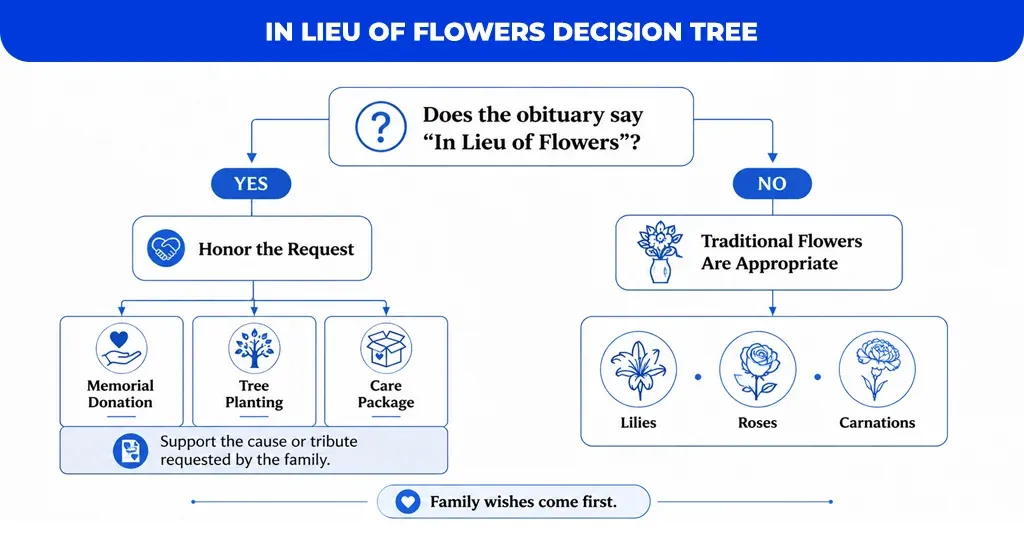
Quick Answer: What Flowers Should You Send to a Funeral? Immediate family typically orders the casket spray; extended family, friends, and coworkers send standing sprays, wreaths, or basket arrangements instead. White lilies, roses, and carnations are traditional, versatile choices that suit most faiths and relationships. Order flowers to arrive before the visitation or service, not on the day of burial, and always confirm the delivery address with the funeral home first. If the obituary says “in lieu of flowers,” honor that request and choose a memorial donation, tree planting, or care package instead. |
Understanding the Meanings Behind Popular Funeral Flowers
Long before condolence cards, mourners communicated through flowers themselves. This practice, known as floriography, or the language of flowers, became widely popular in 19th-century Victorian England and the United States, a period when open displays of emotion were discouraged, and flowers offered a more acceptable way to express feelings that etiquette otherwise suppressed, according to English Heritage. Many of the sympathy meanings still used today trace back to that Victorian floral code.
Common Funeral Flower Meanings
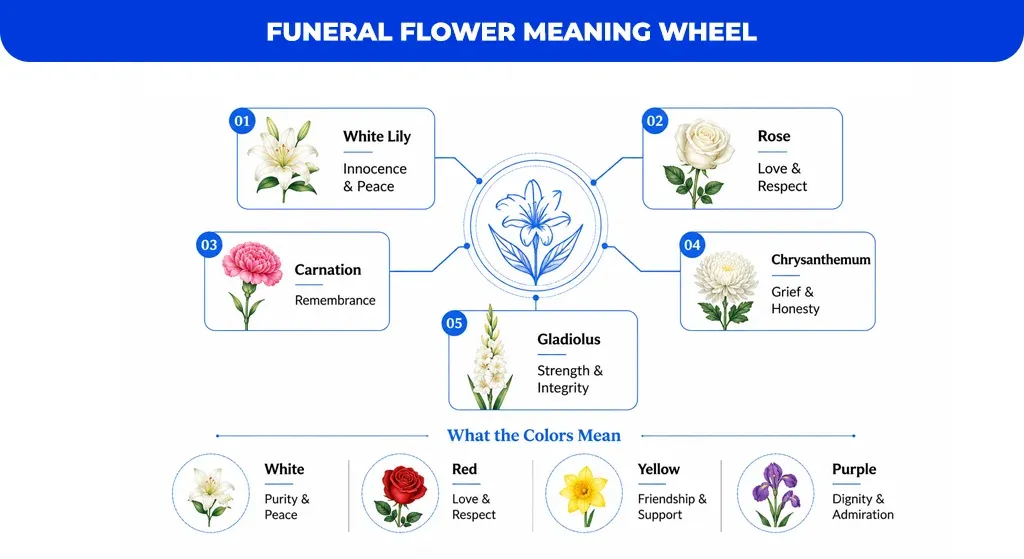
- Lilies, particularly white lilies, symbolize the restored innocence of the soul after death and are among the most requested funeral flowers.
- Roses represent love and respect, with white roses often chosen for reverence and red roses for love and courage.
- Carnations convey love, fascination, and remembrance; red carnations in particular signal admiration for the deceased.
- Chrysanthemums are associated with honesty and grief in many Western traditions, though in several European countries chrysanthemums are used almost exclusively for funerals and are considered inappropriate as a gift for the living.
- Gladioli symbolize strength of character and moral integrity, often included in standing sprays.
What the Colors Mean
- White: purity, peace, and innocence; the most traditional funeral flower color across faiths.
- Red: love, respect, and deep admiration; often reserved for closer relationships.
- Yellow: friendship, warmth, and support; a common choice from coworkers or acquaintances rather than immediate family.
- Purple: dignity and admiration, frequently used in arrangements for an older or highly respected individual.
| Key Takeaways White flowers work across most religions and relationships when you are unsure what to choose.Color and flower choice can subtly reflect the closeness of your relationship to the deceased.Floriography traditions are cultural guidance, not strict rules; sincerity matters more than getting every symbol exactly right. |
Types of Funeral Floral Arrangements: Which One to Choose?
Funeral flower arrangements are generally categorized by who sends them and where they are displayed. Matching the arrangement type to your relationship with the deceased is one of the most practical parts of funeral flower etiquette.
Arrangements by Sender
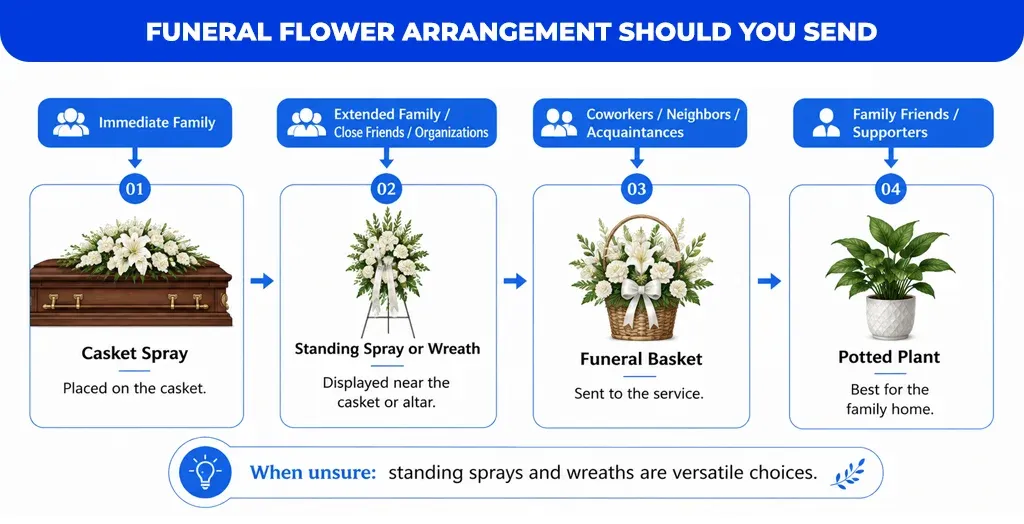
- Casket sprays are traditionally ordered by the immediate family (spouse, children, or parents) and placed directly on top of the casket. A half-couch spray covers the visible half of an open casket; a full-couch spray covers the entire casket for closed-casket services.
- Standing sprays and wreaths are sent by extended family, close friends, or organizations and displayed on an easel near the casket or altar.
- Funeral baskets are a common choice from coworkers, neighbors, or acquaintances; typically sent to the visitation or service.
- Potted plants are often sent directly to the family’s home rather than the service, since they can be kept and cared for well after the funeral.
Sizing and Placement Guidelines
Funeral homes generally group floral tributes by size and placement rather than strict measurements, though most standing sprays range from roughly 24 to 36 inches wide to fit comfortably on a standard easel. Casket sprays are sized to the specific casket, so it is worth confirming dimensions with the funeral home or florist rather than guessing. Arrangements from immediate family are usually placed closest to the casket, while sprays and baskets from extended family and friends are arranged around the room in the order received.
| Key TakeawaysCasket sprays are reserved for immediate family; sending one as a distant friend or coworker can unintentionally overstep.Standing sprays and wreaths are the most versatile choice for extended family, friends, and colleagues.Potted plants make a longer-lasting sympathy gift and are best sent to the home rather than the service. |
Funeral Flower Etiquette: Timing, Delivery, and Cards
When and Where to Send Flowers
Sympathy flowers can be sent to either the funeral home or the family’s private residence, and the right choice depends on timing. Flowers intended for display during the visitation or service should go to the funeral home, church, or synagogue, while flowers meant as an ongoing comfort to the family are better sent to their home, either before or in the weeks following the service.
Florists and funeral directors generally recommend ordering as soon as you learn of the service date, since same-day delivery cannot always be guaranteed and funeral homes need time to receive, arrange, and place flowers before guests arrive. Calling the funeral home directly to confirm the delivery address, drop-off window, and any florist restrictions the family has requested is a reliable way to avoid a missed or awkward delivery.
What to Write on a Card of Funeral Flowers
A funeral flower card message should be brief, sincere, and free of clichés that minimize the loss. A short, well-chosen sentence is more meaningful than an elaborate note.
- With deepest sympathy. [Name] will be dearly missed.
- Thinking of you and your family during this difficult time.
- [Name]’s kindness touched so many lives. Sending love and comfort.
Avoid phrases that suggest the loss was for the best, or that rush the family toward moving on. Signing with your full name and, if relevant, how you knew the deceased helps the family recognize the gesture later, especially if they plan to send thank-you notes for funeral flowers afterward.
Handling “In Lieu of Flowers” Requests
When an obituary states “in lieu of flowers,” the family is asking guests to redirect their support toward something other than a floral tribute, usually a cause tied to the deceased’s life or cause of death. This request should be honored directly. If you feel a small floral gesture is still appropriate, a modest arrangement sent privately to the home, rather than the service, is a reasonable middle ground, but it should never replace the requested donation or tribute.