


Introduction
Facing the death of a loved one is emotionally overwhelming. Managing the financial burden that follows doesn’t have to be. Burial insurance, also called final expense insurance, is a small whole life policy built specifically to cover funeral and burial costs, so your family isn’t left scrambling for cash during one of the hardest weeks of their lives.
This guide breaks down the true burial insurance cost, the factors that drive your premium up or down, and how to size a policy correctly so you protect your family from surprise out-of-pocket expenses without paying for more coverage than you need.
How Much Does Burial Insurance Cost?
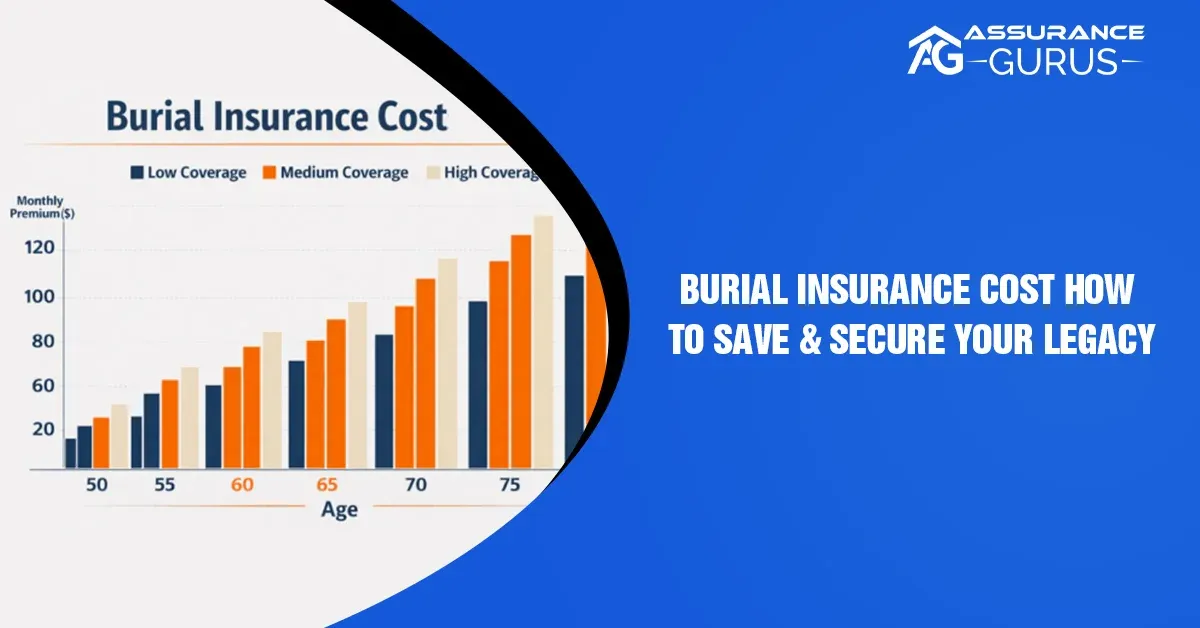
Because burial insurance cost is priced per $1,000 of coverage, the same policy can cost a healthy 50-year-old $30 a month and cost a 75-year-old in fair health $120 a month. The table below shows realistic burial insurance cost per month ranges for a $10,000–$15,000 policy, based on current final expense market data.
| Age | Typical Monthly Cost (Non-Smoker) | Notes |
| 40s–50s | $20 – $50 | Cheapest window to lock in a lifetime rate |
| 60s | $30 – $65 | Most common age range for first-time buyers |
| 70s | $45 – $100 | Rates roughly double in your 50s |
| 80s+ | $70 – $150+ | Guaranteed issue often required; premiums jump sharply |
These figures reflect simplified issues, non-tobacco pricing for $10,000–$15,000 of coverage; guaranteed issue policies and larger death benefits cost more. Women typically pay 10–20% less than men at the same age because of longer average life expectancy.
What Determines Your Burial Insurance Cost
Insurers price final expense policies using four main levers. Understanding each one helps you spot whether a quote is fair or inflated.
Age
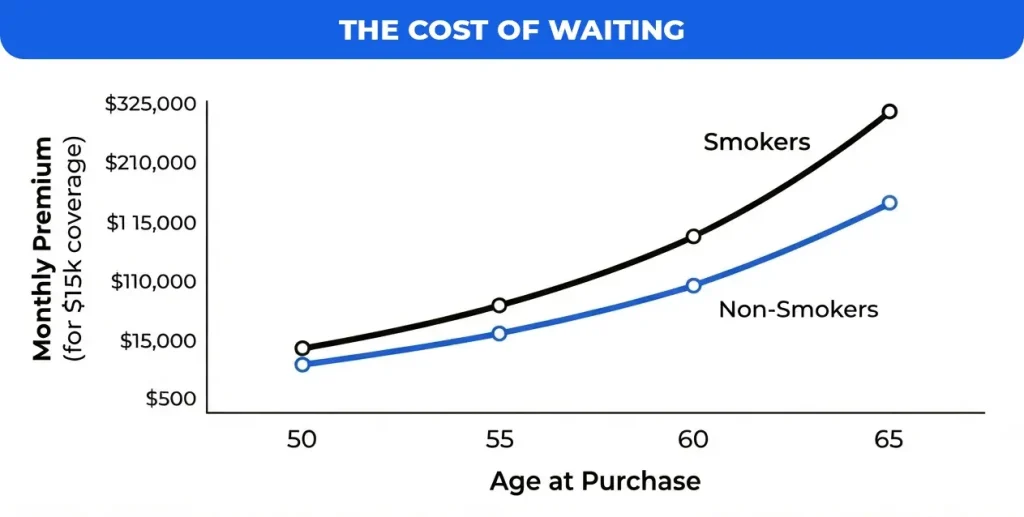
Age is the single biggest driver of burial insurance cost. The younger you are when you apply, the lower your premium, and because whole life burial policies lock in your rate for life, buying at 55 instead of 65 can save you thousands of dollars during the policy’s duration.
Health Status: Simplified Issue vs. Guaranteed Issue
Simplified issue policies ask a short health questionnaire (roughly 10–15 yes/no questions) and no medical exam. Applicants in reasonably good health usually pay less and get coverage starting on day one. Guaranteed issue policies skip health questions entirely, which makes them easier to qualify for, but they almost always carry higher premiums and a graded death benefit, typically a two-year waiting period during which a death from natural causes pays back only premiums paid plus interest, rather than the full benefit.
Coverage Amount
Premiums scale directly with your death benefit. A policy priced at roughly $4–$5 per $1,000 of coverage means $10,000 in coverage costs about $40–$50 a month, while $20,000 in coverage costs roughly double that. Choosing coverage based on your actual expected costs, not a round number, keeps this line item under control.
Tobacco Use
Smokers and regular nicotine users pay significantly more than non-smokers of the same age and health, often 30–60% higher premiums, since tobacco use materially shortens average life expectancy and raises the insurer’s risk.
Types of Burial Insurance Policies
Simplified Issue
No medical exam is required, just a brief health questionnaire. This is the best fit for applicants in average or better health, since it typically offers lower rates and immediate (day-one) full coverage.
Guaranteed Issue
No health questions and no medical exam approval are automatic for eligible ages. The tradeoff is a higher premium and a graded death benefit, usually with a two-year waiting period before the full payout applies. This is generally the right fit only for applicants who can’t qualify for simplified issue due to serious health conditions.
Why Whole Life Is the Standard for Burial Insurance
Term life insurance is cheaper up front but expires at a set age, often 80, and premiums frequently increase every five years. Since no one can predict exactly when they’ll pass away, a policy that can lapse right when it’s needed defeats the purpose. Permanent whole life insurance never expires as long as premiums are paid, and the rate is locked in at issue, which is why it’s the standard structure for burial and final expense coverage.
Factors That Influence Your Final Expense Bill
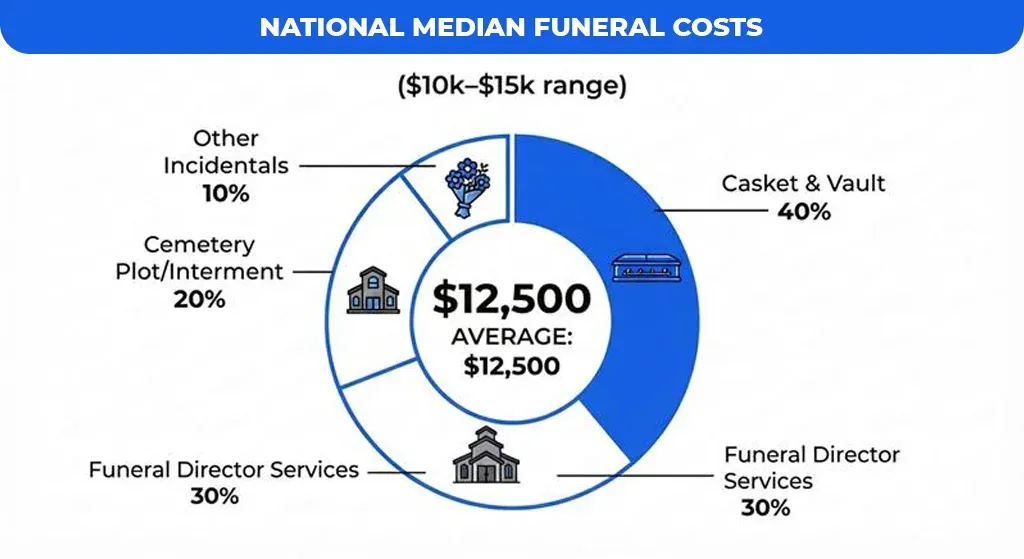
According to the National Funeral Directors Association’s most recent General Price List Study, the national median cost of a funeral with viewing and burial is $8,300, rising to roughly $9,995 once a burial vault is included. The median cost of a funeral with cremation and a viewing is $6,280. Add cemetery fees, and a full traditional burial commonly totals $11,000–$18,000.
Burial Costs
- Casket ($1,000–$4,500+, often the single largest line item)
- Cemetery plot and burial vault or grave liner
- Grave opening and closing fees
- Embalming, cosmetic preparation, and use of the funeral home for a viewing
Cremation
- Urn and cremation container
- Memorial service or celebration of life
- Lower overhead overall, direct cremation can start around $1,000–$2,500
Additional “Hidden” Costs
Beyond the funeral home bill, families commonly face:
- Headstone or grave marker ($1,000–$3,000)
- Flowers and floral arrangements
- Obituary placement
- Transportation, including the hearse and family car use
- Death certificate copies and other administrative fees
How to Calculate How Much Coverage You Need
Correct policy sizing prevents both under-coverage, which leaves a gap for your family to fill, and over-coverage, which entails paying for a death benefit you don’t truly require.
Step-by-Step Worksheet
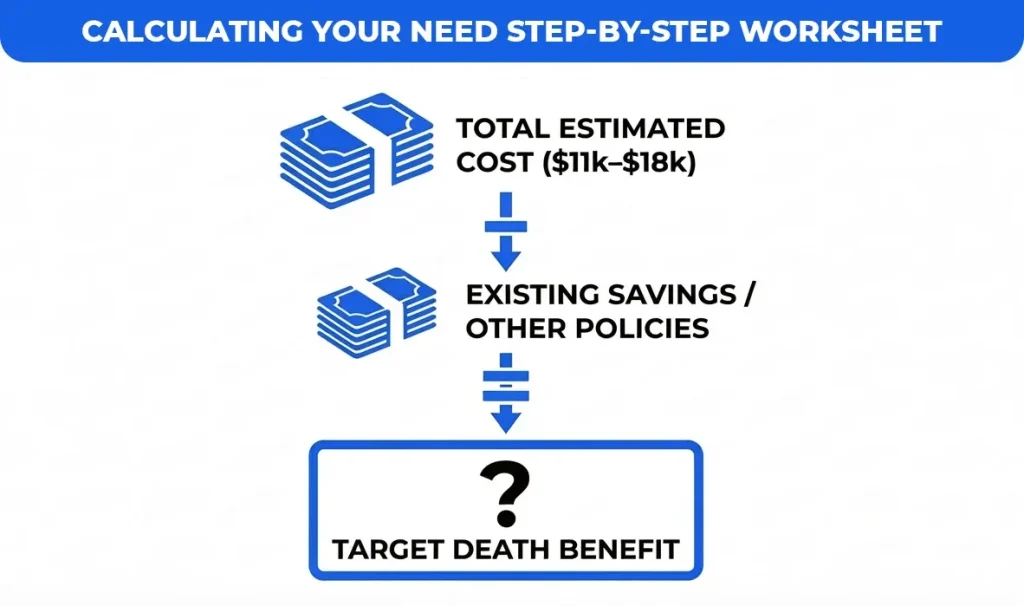
- List fixed costs: casket or urn, cemetery plot or niche, headstone.
- List service costs: viewing, funeral home basic services fee, and transportation.
- Estimate incidentals: flowers, obituary, death certificates, clergy or celebrant fees, reception.
- Subtract any existing savings, pre-need arrangements, or death benefits from other life insurance policies.
The number left over is your target death benefit. Most families land between $10,000 and $20,000.
Pro Tip: Lock In Your Rate While You’re Healthy
Funeral costs have risen faster than general inflation in recent years, and burial insurance cost premiums only move in one direction as you age. Buying coverage now locks in both your health rating and your premium for life. Waiting five or ten years typically means paying a permanently higher rate for the same coverage.
Common Myths About Burial Insurance Cost
| Myth | Fact |
| “I’m too old to get covered.” | Coverage is often available up to age 85 or beyond, though guaranteed issue and higher premiums typically apply at older ages. |
| “I’ll be a burden on my family if I don’t buy this.” | Burial insurance cost provides peace of mind, but it’s one option among several that families also have access to Social Security’s modest death benefit and other resources. |
| “The insurance company pays the funeral home directly.” | In almost all cases, the named beneficiary receives the cash payout directly and decides how to use it, including paying the funeral home. |
Conclusion
Burial insurance cost serves as a vital financial tool, but its true, lasting value is found in the profound emotional peace of mind it provides to those you leave behind. By securing a policy now, you effectively remove the heavy burden of unexpected funeral expenses from your family, ensuring that they can focus entirely on honoring your life and cherishing their memories during a period of deep grief rather than scrambling to manage a sudden, crushing financial obligation.
Before you finalize your decision, it is essential to confidently shop around and thoroughly compare quotes across multiple top-tier carriers, as the rates for identical coverage can vary significantly depending on the insurer’s specific underwriting guidelines. By openly discussing your final wishes with your loved ones and periodically revisiting your coverage as funeral costs change.