
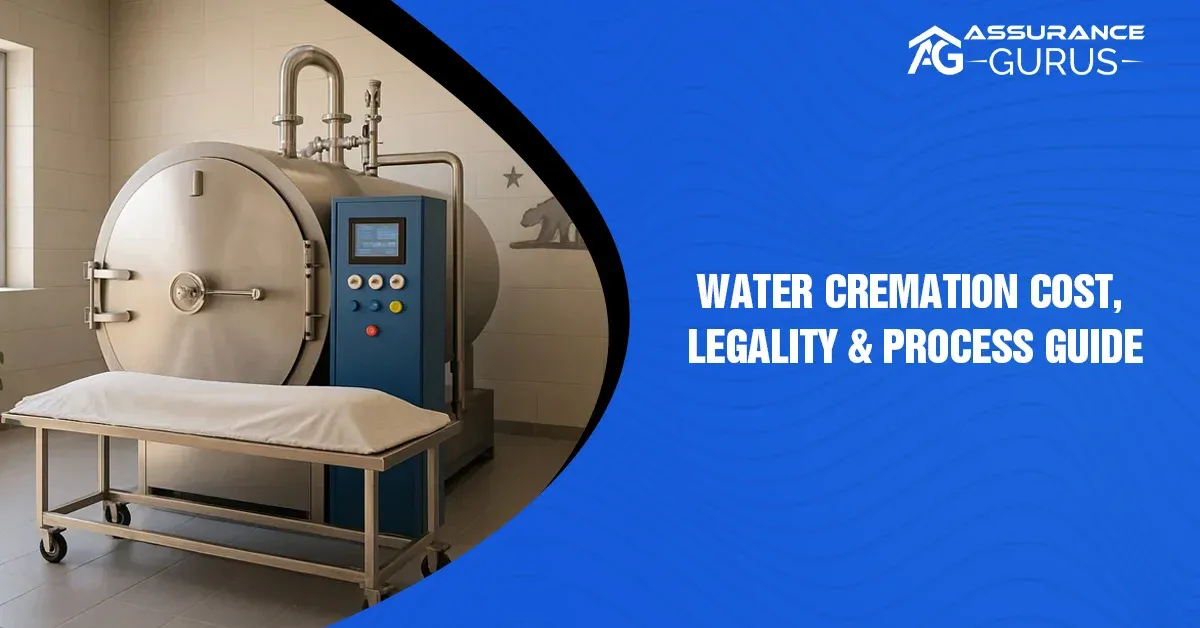

Quick Answer Water cremation, also called alkaline hydrolysis or aquamation, uses water, gentle heat, and an alkaline solution to break down a body instead of flame. The process takes roughly four to six hours, and returns bone remains to the family as a fine powder, similar to traditional ashes. As of March 2026, it is legal for human remains in 26 U.S. states, according to the Cremation Association of North America (CANA). Direct water cremation typically costs between $1,300 and $4,600, depending on location and provider. |
Water cremation is a form of final disposition that dissolves soft tissue using a heated mixture of water and alkali rather than fire. It is known by several names, including alkaline hydrolysis, aquamation, resomation, and bio-cremation. The process was patented in the late 19th century and used for over a hundred years to dispose of animal remains before funeral providers adapted it for human use in the early 2000s.
Families choose water cremation for a mix of practical and personal reasons: lower energy use, no direct air emissions, and a gentler process than flame-based cremation. This guide explains how the process works, what it costs, where it is legal, and how it compares to traditional cremation and burial, so you can decide whether it fits your family’s values and budget.
What Is Water Cremation? Understanding Alkaline Hydrolysis
Alkaline hydrolysis is a chemical process that accelerates the natural breakdown of organic tissue. A body is placed in a stainless-steel vessel filled with a solution of water and an alkali, typically potassium hydroxide, or a combination of potassium and sodium hydroxide. Heat and gentle water flow speed up decomposition that would otherwise take years to occur naturally in soil.
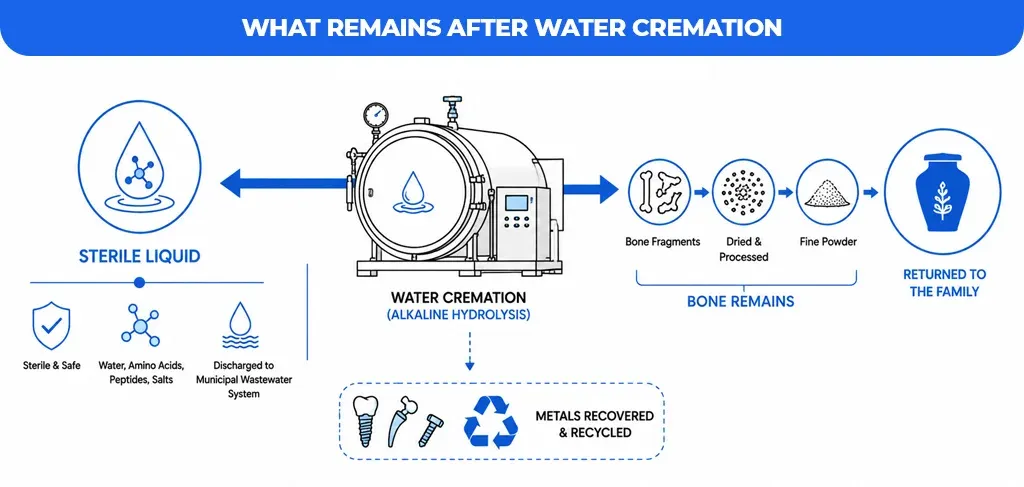
At the end of the process, two things remain:
- A sterile liquid made up of water, amino acids, peptides, sugars, and salts. Licensed facilities discharge this liquid into the municipal wastewater system under the same regulatory permits that govern other approved industrial discharges.
- Bone fragments, which are dried and processed into a fine, white powder similar in appearance to traditional cremated remains. In an urn, these are given back to the family.
Dental fillings, surgical implants, and other metal items are not dissolved by the process. They can be recovered and recycled, which some providers cite as an added environmental benefit over flame cremation, where such materials are typically lost to combustion or removed as residue.
How Does Water Cremation Work? Step-by-Step
The process follows a broadly consistent sequence across licensed facilities:
- Preparation. The body is placed in a biodegradable shroud or a natural-fiber vessel, typically silk, wool, or cotton, without embalming chemicals, which would interfere with the chemical reaction.
- Placement in the chamber. The vessel is loaded into a sealed, airtight, watertight stainless-steel chamber holding roughly 100 gallons of liquid, according to the Cremation Association of North America (CANA).
- The reaction. The chamber is filled with a solution of water and alkali and heated to approximately 300°F (150°C) under pressure, which keeps the liquid from boiling. Gentle circulation speeds the breakdown of soft tissue.
- Processing time. A full cycle generally takes between four and six hours, though timing can vary with body composition and the specific equipment used.
- Recovery. Once the cycle ends, the remaining bone fragments are rinsed, dried, and processed into a fine powder, the same finishing step used after flame cremation.
- Return to the family. The processed remains are placed in an urn or temporary container and returned to the family or their funeral home, following the same chain-of-custody procedures used for traditional cremated remains.
Is the Liquid Byproduct Safe?
This is one of the most common concerns families raise, so it is worth addressing directly. The liquid produced during alkaline hydrolysis is sterile: the heat and alkalinity of the process neutralize DNA and destroy pathogens. Facilities do not release this liquid untreated into rivers or the open environment. Instead, it is discharged into the municipal sewer system under the same wastewater permits used by hospitals, laboratories, and other regulated facilities, and it is processed through standard treatment infrastructure before release.
Water Cremation Cost
Water cremation pricing varies by state, provider availability, and the services included. Based on multiple 2025–2026 industry cost surveys, direct water cremation covering transport, the process itself, and return of remains in a basic container generally falls between $1,300 and $4,600, with several sources citing a national average near $2,500.
For comparison, the National Funeral Directors Association (NFDA) reported a 2023 median cost of $6,280 for a traditional funeral that includes a viewing and flame cremation, compared with $8,300 for a funeral with viewing and burial. Those figures reflect full-service arrangements rather than direct cremation alone, but they help explain why the disposition method is only one part of the overall cost families weigh, alongside services, staff time, and ceremony.
Two factors influence water cremation pricing more than any other:
- Distance to a licensed facility. Where no local provider exists, transportation and logistics can add substantially to the total cost.
- Services selected. A basic, direct arrangement costs far less than a package that includes a viewing, ceremony, or premium urn.
Always request an itemized price list before committing, since bundled “aquamation packages” can vary widely in what they include.
Water Cremation vs. Flame Cremation vs. Traditional Burial
Attribute | Water Cremation | Flame Cremation | Traditional Burial |
Process | Water + alkaline solution, heat, mild pressure | Direct flame, ~1,400–2,000°F | Embalming (optional) + casket burial |
Typical time | 4–6 hours | 2–3 hours | Days to weeks to arrange |
Direct air emissions | None (no combustion) | CO₂ and possible mercury vapor from dental fillings | None from the burial itself |
Energy use vs. flame cremation | Estimated 75–90% lower (multiple life-cycle studies) | Baseline | Lower, but land and materials add impact |
Typical direct cost* | $1,300–$4,600 | $1,000–$3,600 (After.com, 2026) | $8,300 median with viewing (NFDA, 2023) |
Legal availability (U.S.) | 26 states as of March 2026 (CANA) | All 50 states | All 50 states |
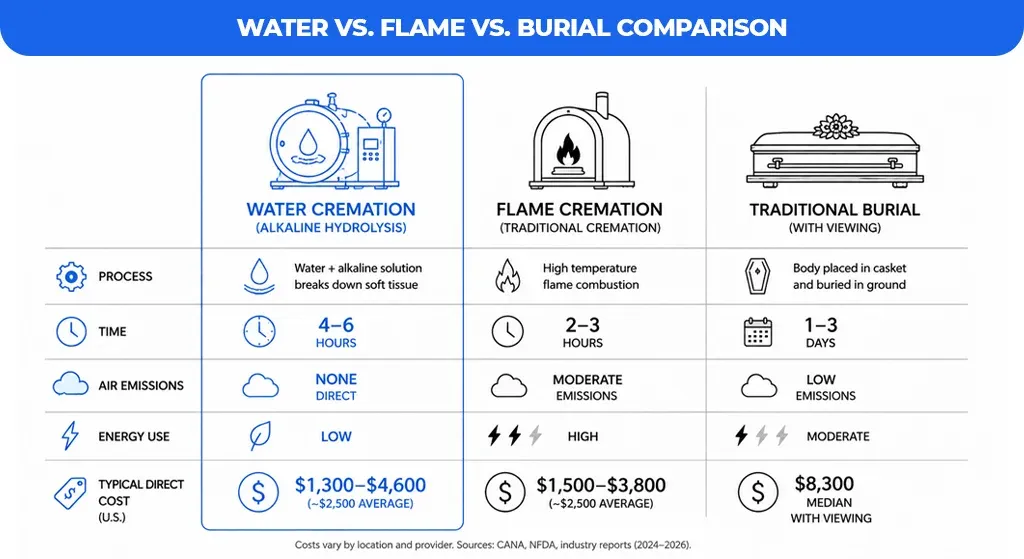
Because environmental research methods differ across studies, published estimates for exact energy savings vary. Several life-cycle assessments, including research reviewed by Durham University, have found that alkaline hydrolysis uses a fraction of the energy required for flame cremation and produces substantially lower greenhouse gas emissions, with estimates generally in the range of 75 to 90 percent less than conventional cremation. Because there is no combustion, the process also avoids releasing mercury vapor from dental fillings into the air; instead, metal fillings and implants remain intact and can be separated out and recycled.
Pros and Cons of Water Cremation
Pros
- Lower energy use. Multiple life-cycle studies rank alkaline hydrolysis among the lowest-impact disposition methods for energy consumption.
- No direct air emissions. Because the process does not involve combustion, it does not release the carbon dioxide or mercury vapor associated with flame cremation.
- A gentler process. The chemical breakdown mimics natural decomposition rather than intense heat, which some families find easier to reconcile emotionally.
- Metal recovery. Surgical implants and dental work remain intact and can be recycled rather than lost to combustion.
- A familiar outcome. Families still receive processed remains in an urn, following a similar timeline and chain-of-custody as flame cremation.
Cons
- Limited legal availability. As of March 2026, alkaline hydrolysis is legal for human remains in 26 U.S. states, according to CANA, meaning it is not an option everywhere.
- Uneven access even where legal. In several legal states, including Idaho, Kansas, Maryland, Vermont, and Wyoming, no licensed provider currently operates the required equipment, so families may need to arrange out-of-state transport.
- Cost can exceed flame cremation. Where providers are scarce, pricing can run higher than a comparable flame cremation because of transport and limited competition.
- Cultural and religious considerations. As with any non-burial disposition, some religious and cultural traditions have specific views on water-based methods, so it is worth discussing with a faith leader or family in advance.
- Newer to most consumers. Because the process is less familiar than flame cremation, some families need time and explanation before choosing it.
Where Is Water Cremation Legal? (And Why Isn’t It Legal Everywhere?)
Water cremation is regulated at the state level in the U.S., which means legality depends entirely on where a death occurs or where a family chooses to arrange services. As of March 2026, CANA lists alkaline hydrolysis as legal in 26 states, including Alabama, Arizona, California, Colorado, Connecticut, Florida, Georgia, Hawaii, Idaho, Illinois, Kansas, Maine, Maryland, Minnesota, Missouri, North Carolina, Oklahoma, Oregon, South Carolina, Tennessee, Utah, Vermont, Washington, West Virginia, Wyoming, and Nevada.
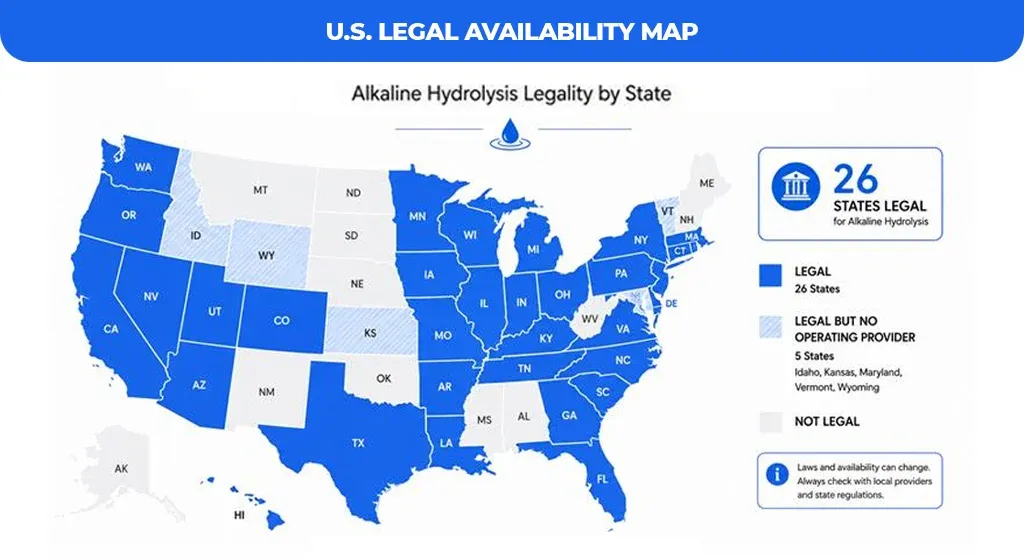
Legal recognition and practical availability are two different things. A state can authorize alkaline hydrolysis in statute while having no operating facility within its borders currently the case in Idaho, Kansas, Maryland, Vermont, and Wyoming. In those states, families typically work with a local funeral home that arranges transport to a licensed out-of-state facility.
Why isn’t water cremation legal in every state?
In most states without authorization, the core issue is definitional: cremation statutes were written decades ago and define “cremation” narrowly as a flame-based process, so alkaline hydrolysis falls outside the existing legal framework. Expanding that definition requires new legislation, which several states, including Pennsylvania, Texas, and Massachusetts, have introduced or were actively considering as of early 2026.
How Water Cremation Fits Into End-of-Life Planning
Disposition method is only one piece of a broader end-of-life plan. Many families pre-arrange their funeral wishes, including their preferred method of disposition, through a pre-need funeral contract with a licensed funeral home. Others fund those wishes with final expense insurance or a small whole life policy, naming a beneficiary who is responsible for carrying out their instructions and covering costs such as transport, processing fees, and an urn.
Because water cremation is not universally available, it is worth confirming legal status and provider access in your state and any state you might relocate to or pass away in before finalizing pre-need arrangements. A licensed funeral director can confirm current regulations, and organizations such as the NFDA and CANA maintain updated state-by-state summaries for consumers and industry professionals alike.
Key Takeaways
|
Planning Ahead With Confidence
Choosing between water cremation, flame cremation, and burial is as much a personal decision as a practical one, and the right answer depends on your family’s values, budget, and local availability. Whatever you decide, the details are easier to manage when you understand your options ahead of time rather than during a crisis.
Assurance Gurus offers guidance on funeral planning, insurance, and sustainable end-of-life options, with resources built to help families compare providers, understand costs, and make informed decisions before they’re needed. Visit Assurance Gurus to explore trusted planning tools and connect with resources tailored to your family’s needs.