



Losing a parent, a partner, or a primary earner doesn’t just break a family’s heart; it can break its budget. A mortgage payment doesn’t pause for grief, and neither does tuition, a car loan, or the electric bill. That’s the quiet, practical weight behind every conversation about life insurance: it isn’t really about death, it’s about whether the people left behind can keep their home and routine intact.
For many families, the hardest part isn’t deciding whether to get coverage; it’s figuring out who to trust to help them choose it. That’s where Family First Life insurance enters the picture. Family First Life (FFL) is a national insurance marketing organization that connects families with policies from dozens of carriers rather than selling one in-house product. This guide covers how FFL actually operates, the policies its agents sell, how to calculate the coverage your family needs, and, just as importantly, what the reviews, complaints, and legal scrutiny surrounding the company actually say.
What Is Family First Life Insurance?
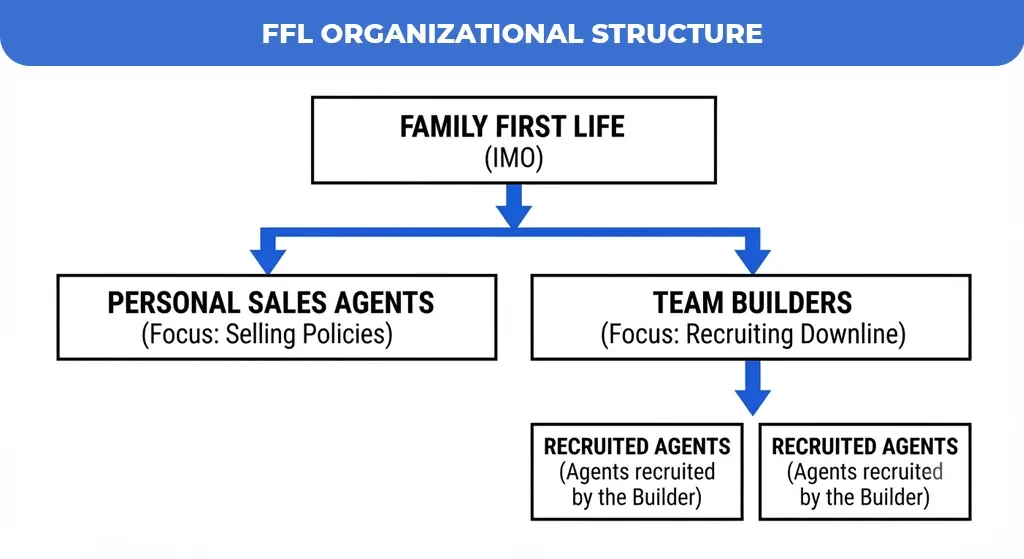
Family First Life is not an insurance company. It doesn’t underwrite policies, hold reserves, or pay claims directly. It’s an independent insurance broker, formally an insurance marketing organization (IMO), formed in 2013 by Shawn Meaike and headquartered in Connecticut. In 2022, Family First Life was acquired by Integrity Marketing Group, one of the largest insurance distribution companies in the country, though it continues to operate under its own brand with a network reported at well over 17,000 licensed agents nationwide.
FFL agents are trained and licensed to sell policies underwritten by outside carriers such as Mutual of Omaha, AIG, John Hancock, and others. That distinction matters more than it sounds: an agent who works directly for a single insurance agency can only offer that carrier’s products, even when a competitor’s policy would fit the client better. A broker isn’t boxed in that way.
The Broker Advantage: Comparing Carriers Instead of Selling One
Because FFL agents aren’t tied to one product line, they can take a client’s age, health history, and budget and run it across several carriers to produce an actual policy comparison. In practice, this looks like:
- A 45-year-old with well-controlled diabetes might be declined by one carrier’s underwriting but approved at a standard rate by another.
- A young family on a tight budget can compare term lengths and premiums across five or six companies in one conversation instead of five or six separate sales calls.
- Someone who doesn’t pass a fully underwritten medical exam can pivot to a simplified-issue or guaranteed-issue product from a different carrier without restarting the search.
The Broker Advantage
This is the core case for using an independent insurance broker instead of a single-carrier agency, and it’s the reason most families end up comparing policies through an FFL agent rather than one insurance company’s local office.
One clarification worth making early: Family First Life is a separate company from “First Family Insurance,” a similarly named agency that has drawn its own unrelated set of complaints, mostly about repeated calls and texts.
Core Insurance Products for Families
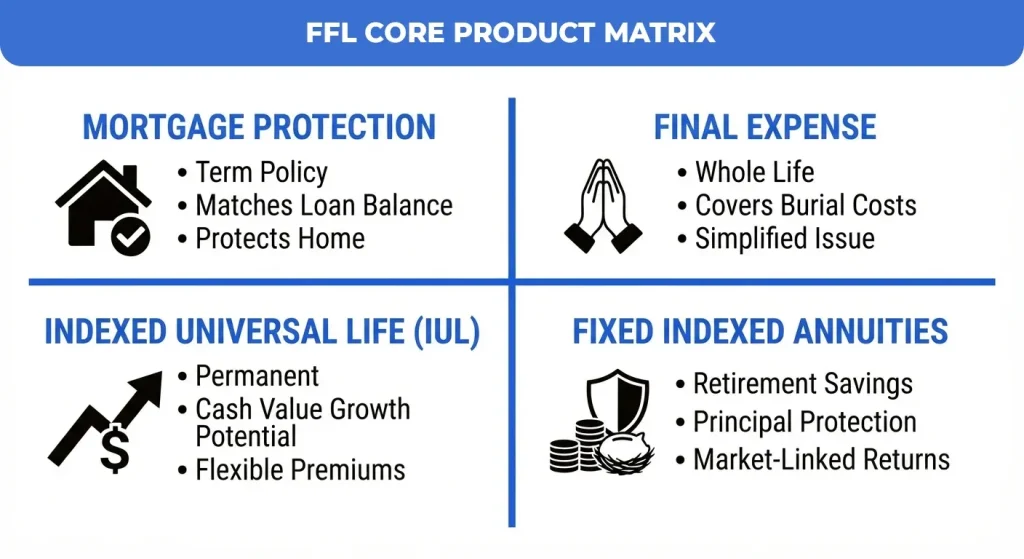
FFL agents primarily sell four types of products. Each solves a different problem, so the “best” one depends entirely on what you’re trying to protect.
Mortgage Protection Insurance
Mortgage protection is term life insurance built around one specific goal: making sure the mortgage gets paid off if the borrower dies, so the family isn’t forced to sell or refinance under pressure. Coverage amounts and terms are typically matched to the remaining loan balance and payoff timeline.
Final Expense Insurance
Final expense policies are small, permanent whole life policies meant to cover funeral, burial, and other end-of-life costs, which routinely run into five figures. Because the death benefit is modest, these policies often use simplified underwriting, meaning no medical exam, just a health questionnaire, which makes them accessible to older applicants or people with health conditions that would complicate other coverage.
Indexed Universal Life (IUL)
IUL is permanent life insurance that combines a death benefit with a cash value account whose growth is linked to a market index, such as the S&P 500, subject to caps and floors set by the carrier. It’s more complex and more expensive than term coverage, and it’s also the product category that has drawn the most regulatory and legal scrutiny industry-wide, including toward FFL specifically, over agents allegedly presenting it as a straightforward investment rather than insurance with real limitations.
Fixed Indexed Annuities
Fixed indexed annuities are contracts designed to protect and grow retirement savings, with principal protection and returns tied to a market index within set limits. They’re generally positioned for people closer to retirement who want growth potential without direct market risk.
| Product | Primary Goal | Policy Duration | Best For |
| Mortgage Protection | Pay off the mortgage balance if a borrower dies | Term (usually matched to the mortgage length) | Homeowners with a new or mid-term mortgage |
| Final Expense | Cover funeral, burial, and end-of-life costs | Permanent (whole life) | Older adults or anyone wanting simplified underwriting |
| Indexed Universal Life (IUL) | Lifelong death benefit plus market-linked cash value growth | Permanent, flexible premiums | Higher earners wanting tax-advantaged growth alongside coverage |
| Fixed Indexed Annuities | Protect and grow retirement savings | Multi-year accumulation and payout phases | Pre-retirees wanting principal protection |
How to Assess Your Family’s Life Insurance Needs
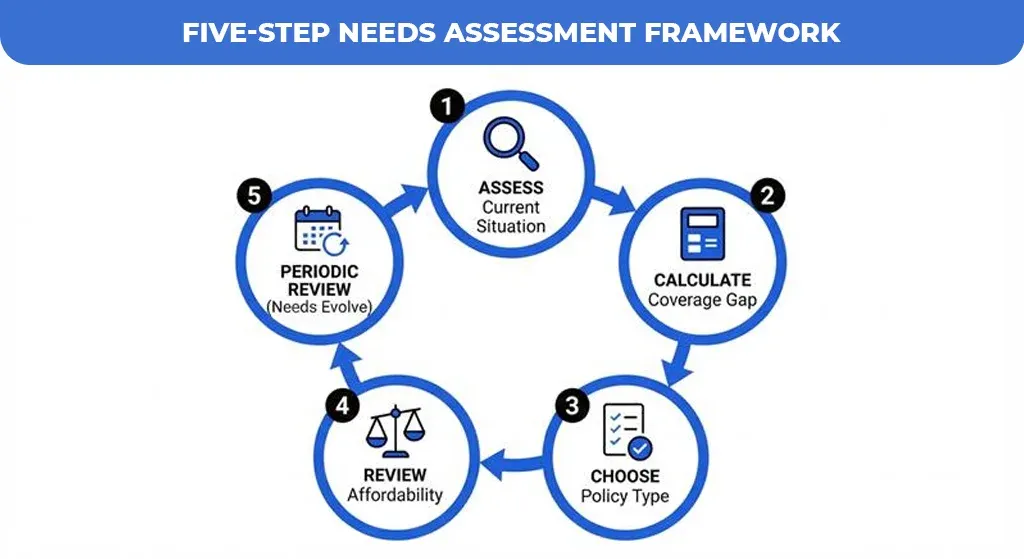
Regardless of which brokerage or agent you work with, the math behind “how much coverage do I need” is the same. A useful way to work through it is a simple five-step framework: Assess, Calculate, Choose, Review Affordability, and Periodic Review.
The Income Replacement Rule
A common starting formula is to multiply your annual income by the number of years your family would need that income replaced, often 10 to 15 years, or roughly until your youngest child would be financially independent. Someone earning $70,000 a year with 15 years until the kids are grown might target somewhere in the neighborhood of $700,000 to $1,050,000 in coverage, before adjusting for debt.
Accounting for Debt
Layer in what income replacement alone won’t cover:
- Remaining mortgage balance
- Personal debt, credit cards, auto loans, personal loans
- Future costs, like college tuition for kids still at home
Future-Proofing: Coverage That Grows With Your Family
Life insurance needs aren’t static. Marriage, the birth of a child, buying a home, or a significant raise are all natural checkpoints to revisit your coverage, either the amount, the term length, or whether A policy you had when you were young still applies to your current situation.
Why Choose a Brokerage Model?
Personalization
A good Family First Life insurance agent isn’t selling you a product; they’re matching your health profile and budget against a shelf of carriers to find the closest fit. That only works, however, if the individual agent is diligent about actually comparing options rather than defaulting to whichever carrier pays the best commission, which is worth asking about directly.
Accessibility: Local Agents, National Reach
Because FFL licenses independent agents across the country, most families can meet face-to-face or speak with someone in their own time zone rather than an anonymous call center. That local presence is a real trust advantage over purely online-only sellers, though it also means service quality varies agent to agent rather than being centrally standardized.
A Note on the Career Side: Commission, Recruiting, and Reviews
If you’ve landed here searching for Family First Life insurance careers, jobs, or salary rather than a policy, it’s worth knowing upfront that FFL agents are independent contractors paid on commission, not salaried employees, so there’s no fixed “salary” in the traditional sense, and 1099 income varies enormously by production. Employee-review sites show a genuinely mixed picture: many agents describe flexible schedules and uncapped commission potential, while others describe teams that lean heavily on recruiting new agents into a downline structure alongside selling policies. That recruiting, plus-sales structure is common across the life insurance IMO industry. FFL, Symmetry Financial Group, and Quility all use variations of it, and it isn’t unique to this one company, but it’s exactly why some people ask whether Family First Life insurance is a pyramid scheme. The legal distinction is that commissions are supposed to derive primarily from actual policy sales rather than recruitment fees; if you’re evaluating an opportunity here, ask directly how compensation splits between personal sales and recruiting overrides, and get it in writing.
Is Family First Life Insurance Legit? What the Reviews Actually Say
Yes, Family First Life is a real, licensed insurance marketing organization, not a scam in the legal sense. It holds a Better Business Bureau profile, is licensed to operate in all 50 states, and, by its own reporting,g works with tens of thousands of agents nationwide. That said, “legit” and “flawless” aren’t the same thing, and the honest picture is mixed.
On the legal side, Family First Life has also faced lawsuits and regulatory attention tied specifically to how some agents marketed Indexed Universal Life policies, with allegations that IUL products were presented more like investments than insurance. That’s a real, documented pattern worth taking seriously if an agent pitches you an IUL policy, and it’s a good reason to insist on written illustrations that separate guaranteed numbers from projected ones.
Conclusion
Securing your family’s financial future is the ultimate act of protection, and choosing the right Family First Life insurance policy is a critical step in that journey. Because your needs are unique, the brokerage model offers the personalized flexibility to compare top-tier carriers and find the perfect match for your specific goals—whether that is robust mortgage protection, essential final expense coverage, or long-term growth strategies.
Don’t settle for one-size-fits-all solutions when your peace of mind is on the line. Take control of your legacy today by conducting thorough due diligence and partnering with a licensed professional who prioritizes transparency. Ready to cement your family’s stability? Contact a licensed agent now for a personalized quote or schedule a free needs-assessment consultation to put your financial plan into action.